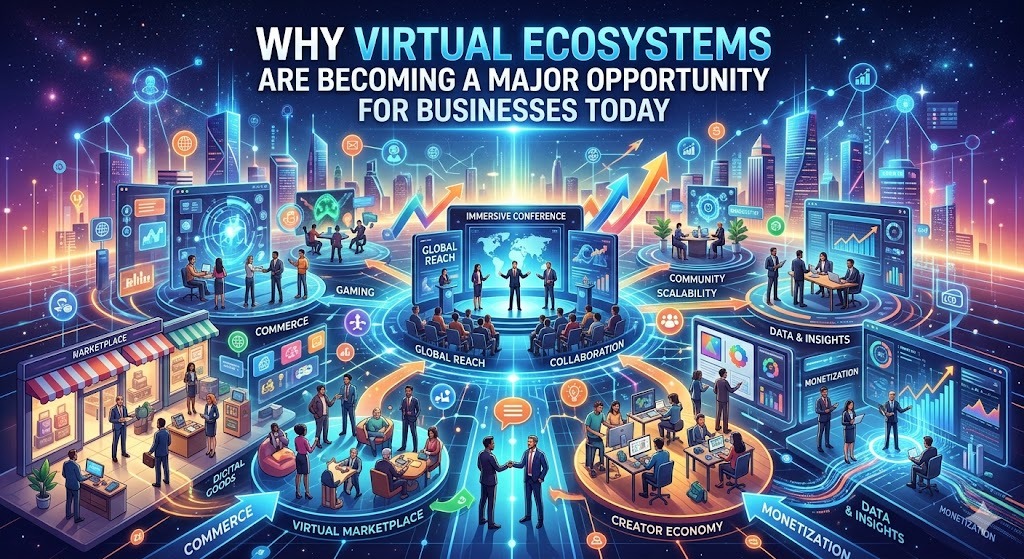
Why Virtual Ecosystems Are Becoming a Major Opportunity for Businesses Today
The internet is evolving at a swift pace. Websites began as simple, static pages. Now, they are vibrant platforms. People work, shop, socialize, and collaborate online. Today, virtual ecosystems are gaining traction. Businesses seek innovative ways to connect with customers and enhance their online presence.
Virtual ecosystems mix technologies. They include immersive environments, digital assets, social interactions, and real-time experiences. These environments let businesses create interactive spaces. Users can engage with brands in new ways, beyond websites or mobile apps.
To stay competitive in the digital economy, companies need virtual ecosystems. They’re not a trend. They are a key business opportunity.
Understanding Virtual Ecosystems
A virtual ecosystem is a digital space. Here, users, businesses, technologies, and digital assets interact on a shared platform. These ecosystems often include immersive environments, interactive communities, digital commerce, and real-time collaboration.
Virtual ecosystems differ from traditional digital platforms. They don’t focus on one function. Instead, they blend many digital experiences into a single, connected environment.
Key elements of a virtual ecosystem include:
- Interactive digital environments
- User-generated content and avatars
- Virtual marketplaces
- Community-driven engagement
- Digital collaboration tools
- Integrated entertainment and experiences
These parts combine to make a digital space that feels lively, engaging, and connected.
Why Businesses Are Paying Attention
Businesses across industries are recognizing the potential of virtual ecosystems. Companies can now create interactive online spaces. Customers can take part by taking an active role rather than sharing information.
This shift opens new possibilities for marketing, engagement, and revenue generation.
Businesses are investing in virtual ecosystems because they offer:
- Deeper customer engagement
- New digital revenue streams
- Enhanced brand experiences
- Global accessibility
- Innovative marketing opportunities
Companies that embrace immersive digital experiences gain an edge. As consumer expectations change, they attract and keep users better.
Expanding Customer Engagement
One major benefit of virtual ecosystems is how they engage customers in new ways. Traditional digital marketing uses static content like blog posts, videos, and ads. However, by working with a professional metaverse development company, businesses can create immersive digital environments that allow users to interact with brands through virtual experiences, interactive spaces, and real-time engagement.
Virtual ecosystems help brands go beyond sharing content; they create fun, interactive experiences.
Businesses can host virtual product launches. They can create engaging brand experiences. They can set up digital showrooms. They can also organize community events. Users can explore products in a virtual space. They can interact with others and join brand experiences. These activities are more engaging than regular online interactions.
Examples of engagement opportunities include:
- Virtual Product Demonstrations
- Interactive brand storytelling
- Live digital events and conferences
- Community-driven virtual spaces
- Gamified marketing experiences
These experiences help users engage more with brands. This, in turn, boosts brand awareness and loyalty.
New Revenue Opportunities for Businesses
Virtual ecosystems are also opening new business models. Companies can monetize digital experiences in several innovative ways.
Businesses can build digital economies in their virtual spaces. This approach goes beyond traditional e-commerce or advertising.
Some common revenue models include:
- Virtual goods and digital assets
- Subscription-based experiences
- Virtual event access
- Premium digital memberships
- Brand partnerships and sponsorships
Digital assets let users buy virtual items. These include clothing for avatars, digital collectibles, and exclusive experiences.
These new monetization models are expanding how companies generate revenue in digital environments.
The Role of Technology in Virtual Ecosystems
Behind every successful virtual ecosystem is a combination of advanced technologies working together. These technologies help create immersive environments that feel interactive, responsive, and scalable.
Some of the key technologies powering virtual ecosystems include:
- 3D development frameworks
- Augmented and virtual reality tools
- Blockchain-based digital ownership
- Real-time networking infrastructure
- AI-driven user experiences
- Cloud computing for scalability
These technologies help developers make spaces. Many users can connect at the same time—thousands or even millions.
To create complex digital platforms, businesses often work with a metaverse development company. These companies focus on immersive technologies, 3D environments, and scalable digital ecosystems.
Experts help organizations create and launch virtual environments tailored to their industry needs.
Industries Benefiting from Virtual Ecosystems
Virtual ecosystems are not limited to gaming or entertainment. Many industries are trying out immersive digital environments. They aim to enhance their services and connect with more audiences.
Retail and E-commerce
Retail brands are building virtual stores. Customers can browse products. They can chat with digital assistants. Also, they can explore collections in immersive showrooms.
These experiences combine entertainment with shopping, making online retail more engaging.
Education and Training
Educational institutions and training organizations use virtual environments; they create immersive learning experiences.
Students can join interactive simulations, attend virtual classrooms, and work with peers worldwide.
Real Estate
Real estate companies are using virtual ecosystems to showcase properties through immersive tours. Buyers can view properties online and connect with agents in virtual spaces.
Healthcare
Healthcare providers are using virtual environments for training. They also hold remote consultations and conduct medical simulations.
These technologies can improve accessibility and provide new ways to educate medical professionals.
Corporate Collaboration
Businesses are building virtual workplaces. Here, employees can collaborate, hold meetings, and take part in team-building activities. This happens regardless of their location.
Strengthening Brand Presence in Digital Spaces
Virtual ecosystems give businesses a new way to strengthen their brand presence. Companies can create immersive brand worlds. These worlds show their identity and values, not their products or services.
These environments allow brands to:
- Tell compelling stories
- Create emotional connections with users
- Provide memorable experiences
- Encourage community interaction
When people feel a connection with a brand, they’re more likely to come back and engage.
Challenges Businesses Should Consider
Businesses have many opportunities, but they must also recognize challenges in virtual ecosystems.
Technical complexity
Building immersive environments requires advanced technical expertise, infrastructure, and development resources.
User adoption
Virtual ecosystems are growing fast. However, some audiences might still not know much about these experiences. Businesses need to ensure that platforms remain accessible and easy to use.
Security and Privacy
Digital ecosystems involve user data, digital assets, and online transactions. Businesses must focus on strong security measures to protect users and maintain trust.
Long-term strategy
Marketers should not approach virtual ecosystems as short-term experiments. Companies need a clear plan. They should blend these environments with their digital growth strategy.
Why Early Adoption Matters
History shows that early adopters of emerging technologies often gain the greatest advantages. Companies that embraced e-commerce early (for example) were able to dominate digital retail.
The same pattern is now emerging with virtual ecosystems.
Businesses exploring immersive digital environments can gain experience and sharpen strategies. This helps them build a strong presence before the competition heats up.
Early adopters change user expectations; they also impact the growth of digital ecosystems.
The Future of Virtual Ecosystems
Experts say immersive digital environments will experience rapid growth in the coming years. Better computers, graphics, and internet technology will make virtual ecosystems easier to reach. They will also be more realistic.
Several trends are likely to shape the future of these platforms:
- Greater integration with social platforms
- Expansion of digital commerce
- Improved virtual collaboration tools
- More realistic immersive experiences
- Increased business investment in digital environments
Virtual ecosystems can change how we work, socialize, shop, and connect online. As these technologies grow, their impact will increase.
Final Thoughts
Virtual ecosystems are transforming how businesses operate in the digital world. These environments blend immersive tech, interactive experiences, and digital commerce. This mix helps companies connect with audiences and boost revenue.
Virtual ecosystems offer a strong platform for innovation and growth. They help businesses explore new digital opportunities.
Organizations are investing in immersive tech and partnering with skilled developers. This will help digital spaces grow. They will be vibrant online communities. Here, businesses and users can connect in fresh ways.
Companies that build their presence now will succeed in the next Internet generation.







Post Comment