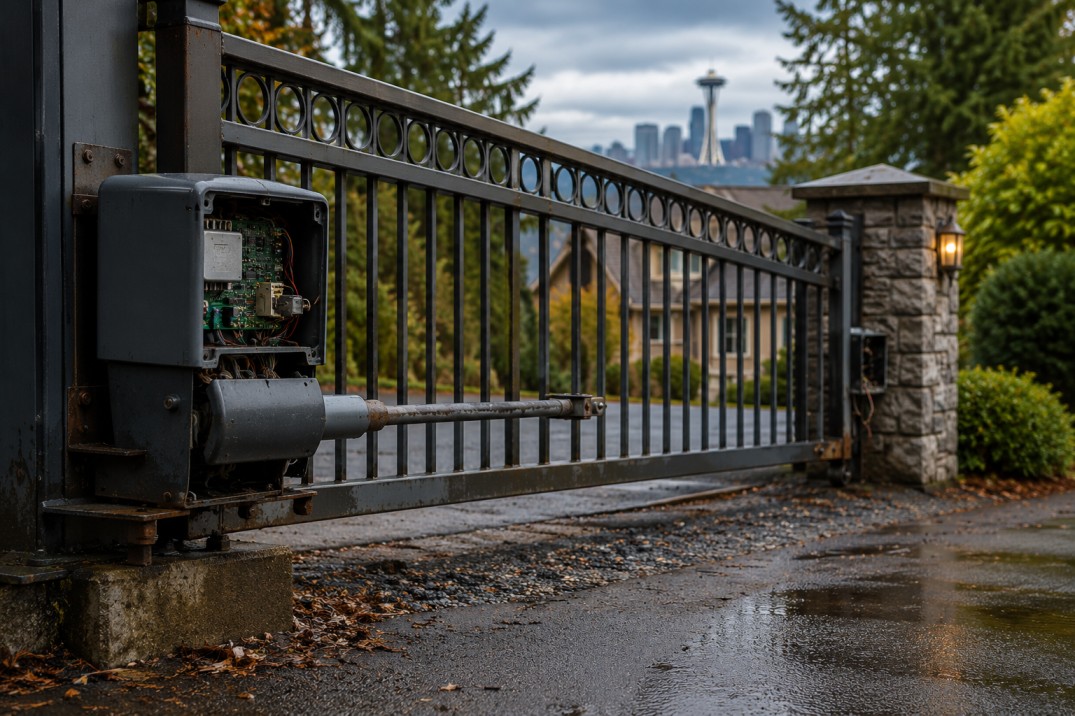
Warning Signs Your Automatic Gate Needs Professional Repair in Seattle
An automatic gate adds convenience, privacy, and security to a residential or commercial property. It allows controlled access without requiring someone to open and close the gate manually, which can be especially helpful during Seattle’s frequent rain and changing weather conditions.
Like any mechanical and electrical system, however, an automatic gate can develop problems over time. Motors wear down, hinges loosen, tracks become obstructed, sensors lose alignment, and wiring may be affected by moisture. Some issues begin as small inconveniences but can eventually leave the gate stuck, damage nearby components, or create a safety risk.
Seattle property owners can avoid more expensive repairs by recognizing the early warning signs of gate trouble. Prompt professional attention can help restore safe operation, protect the access system, and reduce the chance of a complete breakdown.
The Gate Opens or Closes More Slowly Than Usual
A noticeable change in operating speed is often one of the first signs that an automatic gate needs attention. The gate may begin moving slowly from the start, hesitate halfway through its cycle, or take longer than normal to reach the fully open or closed position.
Slow movement can be caused by a weakening motor, worn gears, damaged rollers, low hydraulic pressure, or excessive resistance in the gate’s path. A swing gate may have stiff hinges, while a sliding gate may be struggling against debris or track damage.
Weather can also affect performance. Moisture, dirt, leaves, and corrosion may increase friction and force the motor to work harder. Continuing to operate the gate under this strain can shorten the life of the motor and damage other components.
A technician can inspect the gate’s movement, identify the source of the resistance, and determine whether adjustment, lubrication, cleaning, or replacement parts are needed.
The Gate Makes Grinding, Scraping, or Clicking Sounds
Automatic gates naturally make some noise, but new or unusually loud sounds should not be ignored. Grinding may indicate worn gears, damaged bearings, or rollers that are no longer moving smoothly.
Scraping sounds can occur when a gate is dragging against the ground, rubbing against a post, or moving through a misaligned track. Repeated clicking may come from the motor, control board, relay, or locking mechanism.
A squeaking swing gate may simply need appropriate lubrication, but it can also signal worn hinges or excessive pressure caused by poor alignment. Rattling may indicate loose hardware, damaged brackets, or movement in the gate frame.
The longer these sounds continue, the more likely it is that one damaged component will affect another. Professional inspection can identify the cause before the gate becomes jammed or stops operating completely.
The Gate Stops Before Fully Opening or Closing
An automatic gate should complete its full cycle without stopping unexpectedly. If it opens only partway, pauses in the middle, or fails to close completely, the system may have a sensor, motor, track, or limit-setting problem.
Sliding gates may stop when debris blocks the track or when rollers encounter a bent section. Swing gates may experience resistance from damaged hinges, uneven ground, or a sagging frame.
The operator’s travel limits may also be incorrect. These settings tell the motor where the gate’s fully open and closed positions are located. If the settings change or the system loses calibration, the operator may stop too early.
A partially closed gate can create a security concern because it leaves space for unauthorized entry. It may also block vehicles or pedestrians if it stops in an unexpected position.
The Gate Reverses Without an Obstruction
Automatic gates use safety sensors to prevent them from closing on vehicles, people, pets, or objects. If the system detects an obstruction, it should stop or reverse.
A gate that reverses when nothing is in the way may have dirty, damaged, or misaligned sensors. Moisture, leaves, spiderwebs, and dirt can interfere with the sensor beam. Loose wiring or electrical problems may also cause the control system to receive an incorrect signal.
Never disable the safety sensors to keep the gate operating. These devices are essential for preventing accidents and property damage.
A professional can clean and align the sensors, test their response, inspect the wiring, and confirm that the gate’s closing force is properly adjusted.
The Remote, Keypad, or Access Control Is Unreliable
Access controls should respond consistently. If a remote works only from a short distance, a keypad accepts codes intermittently, or the gate fails to respond to an intercom or mobile application, the problem may involve more than a weak battery.
Possible causes include signal interference, damaged receivers, faulty wiring, control board problems, or moisture inside an access device. Seattle’s wet climate can affect outdoor electrical components when covers, seals, or enclosures become damaged.
Test more than one access method when possible. If the remote fails but the keypad works, the problem may be limited to the remote or receiver. If none of the controls work, the operator may have lost power or developed an internal fault.
A technician can test the complete access system and determine whether the issue is coming from the controls, electrical supply, receiver, or gate operator.
The Gate Has Become Crooked or Misaligned
A gate should remain level and move evenly through its full path. A sagging swing gate, leaning post, or sliding gate that no longer sits correctly on its track requires prompt attention.
Misalignment may be caused by worn hinges, loose brackets, foundation movement, impact damage, or corrosion. Heavy gates can place substantial pressure on posts and supporting hardware, especially when they are used frequently.
If the gate continues to operate while misaligned, the motor may have to push or pull against unnecessary resistance. This can damage the operator, hinges, rollers, tracks, and frame.
Seattle property owners who notice uneven movement, structural shifting, or access problems may need professional Gate Repair Seattle to prevent additional damage and restore dependable operation.
A technician should inspect both the mechanical system and the supporting structure rather than adjusting only the motor.
The Gate Drags Along the Ground
A swing gate that scrapes the driveway or ground may have sagging hinges, a damaged post, or a shifted frame. A sliding gate may drag when rollers are worn, the track is damaged, or the support system is no longer properly aligned.
Dragging creates resistance that places additional strain on the motor. It can also damage the bottom of the gate, scrape protective finishes, and expose metal to moisture and corrosion.
The problem may become worse after rain if soil movement or debris changes the surface around the gate. Temporary adjustments may allow the gate to move again, but the original structural or mechanical issue still needs to be corrected.
Professional repair can restore the proper clearance and reduce the load placed on the automatic operator.
The Motor Runs but the Gate Does Not Move
Hearing the motor without seeing gate movement is a clear sign that something is wrong. The operator may be running, but a gear, chain, belt, arm, or drive component may be damaged or disconnected.
The gate may also be physically jammed by debris, track damage, a seized hinge, or a failed roller. Repeatedly activating the operator can overheat the motor and cause additional internal damage.
Stop using the controls if the motor runs without moving the gate. A technician should inspect the drive system and manually test the gate’s movement after disconnecting the operator safely.
Replacing the motor alone will not solve the problem if the gate is being held in place by mechanical resistance.
The Gate Moves in Jerks or Shakes
Smooth movement is an important sign of a healthy automatic gate. Jerking, shaking, or sudden changes in speed can indicate loose hardware, worn rollers, track problems, damaged hinges, or a struggling operator.
A sliding gate may shake as damaged wheels move over an uneven track. A swing gate may jerk when its hinges are stiff or the operator arm is loose.
Electrical issues can also create irregular movement if the motor is not receiving consistent power. A failing control board, capacitor, or wiring connection may interrupt the operating cycle.
These problems should be inspected before the gate leaves its track, damages the frame, or becomes stuck in an unsafe position.
The Gate Does Not Stay Closed
An automatic gate that closes and then moves open again may have a limit-setting, sensor, lock, or alignment problem. It may also fail to latch securely if the gate has shifted away from the receiving post.
A gate that does not remain closed weakens property security. It may allow unauthorized access or create the appearance that the property is unattended.
Inspect the area from a safe distance to see whether debris is preventing full closure. Do not force the gate into the lock or repeatedly activate the motor.
A professional can check the closing limits, alignment, safety devices, locking mechanism, and control settings to identify why the gate is reopening.
The Gate Has Visible Rust or Corrosion
Seattle’s damp conditions can contribute to rust on metal gates, tracks, hinges, chains, brackets, and electrical enclosures. Surface rust may begin as a cosmetic problem, but continued corrosion can weaken important components.
Rusty hinges may become stiff, while corroded chains and rollers can create uneven movement. Corrosion near electrical connections may interfere with power and communication between the controls and operator.
Small areas of rust should be addressed before they spread beneath the finish. Severely corroded hardware may need to be replaced rather than cleaned.
A technician can identify which parts remain structurally sound and which components should be replaced to maintain safe operation.
Water Has Entered the Control Box
Automatic gate control boards, receivers, wiring connections, and backup batteries are often housed in outdoor enclosures. These boxes are designed to protect electrical components, but cracked covers, worn seals, or poor drainage may allow water inside.
Signs of moisture damage can include intermittent operation, unresponsive controls, tripped breakers, corrosion, or unusual electrical sounds. The gate may work during dry weather and fail after heavy rain.
Do not open an electrical enclosure if there is standing water, exposed wiring, smoke, or active sparking. Disconnect power only when it can be done safely.
Professional service is necessary to identify damaged electrical parts, dry and protect the enclosure, and correct the source of the water intrusion.
The Gate Opens or Closes on Its Own
A gate that activates without a clear command creates both security and safety concerns. Possible causes include faulty remotes, damaged wiring, control board failure, stuck access buttons, or signal interference.
The system may also be receiving commands from an incorrectly programmed device. In other cases, moisture or corrosion can create electrical connections that cause unexpected operation.
Keep people and vehicles away from the gate until the problem has been diagnosed. If safe, disconnect power to prevent unplanned movement.
A technician can test the access controls, receiver, wiring, safety devices, and control board to determine what is triggering the system.
The Backup Battery No Longer Works
Many automatic gate systems include battery backup so the gate can continue operating during a power outage. Batteries lose capacity over time and may no longer hold enough charge to complete a full opening or closing cycle.
Signs of battery failure include slow operation during an outage, warning beeps, control panel alerts, or a gate that does not respond when utility power is unavailable.
Battery condition should be tested as part of regular maintenance. The charging system and wiring should also be checked because installing a new battery will not help if the system is not charging it correctly.
Reliable backup power is especially important when the automatic gate is the main vehicle entrance to the property.
Manual Operation Has Become Difficult
Automatic gates usually include a manual release that allows the gate to be opened during a power failure or operator problem. The gate should still move reasonably smoothly after the automatic system is disconnected.
If manual movement feels extremely heavy, uneven, or restricted, the gate may have a mechanical problem. Worn rollers, damaged tracks, sagging hinges, and frame misalignment can all make manual operation difficult.
Do not force a heavy gate. It may shift suddenly, leave its track, or cause an injury. A technician should inspect the gate’s mechanical condition before reconnecting the operator.
The motor should guide a gate that already moves properly, not compensate for major physical resistance.
Why Prompt Gate Repair Matters
A minor automatic gate problem can place stress on the rest of the system. A worn roller can damage the track, a sagging gate can strain the operator, and a misaligned sensor can prevent secure closure.
Prompt repair helps stop these issues from spreading. It can also reduce the risk of the gate striking a vehicle, trapping someone, leaving the property unsecured, or failing during an emergency.
Professional technicians can evaluate the gate as a complete system, including the motor, controls, sensors, wiring, hinges, rollers, tracks, locks, and structural supports. This makes it more likely that the original cause will be corrected instead of only treating the visible symptom.
Regular Maintenance Can Prevent Sudden Failure
Routine maintenance is one of the best ways to keep an automatic gate dependable. Property owners should watch how the gate moves, listen for new sounds, and keep the operating path clear of leaves, branches, stones, and other debris.
Safety sensors should remain clean and properly positioned. Visible hardware can be checked for rust, looseness, or impact damage, but electrical parts and high-load components should be handled by a trained technician.
Professional maintenance may include lubricating approved parts, aligning the gate, testing the operator, inspecting access controls, checking the battery, and confirming that all safety features work correctly.
Regular service is especially useful in Seattle, where moisture and debris can accelerate wear on outdoor mechanical and electrical systems.
Key Takeaways
Slow movement, unusual noises, misalignment, unreliable controls, unexpected reversing, water damage, and electrical issues are all signs that an automatic gate may need professional repair.
Stop using the gate if it moves unpredictably, drags, opens on its own, or shows signs of electrical failure. Prompt service can protect the operator, improve security, and prevent a manageable problem from becoming a complete breakdown.








Post Comment