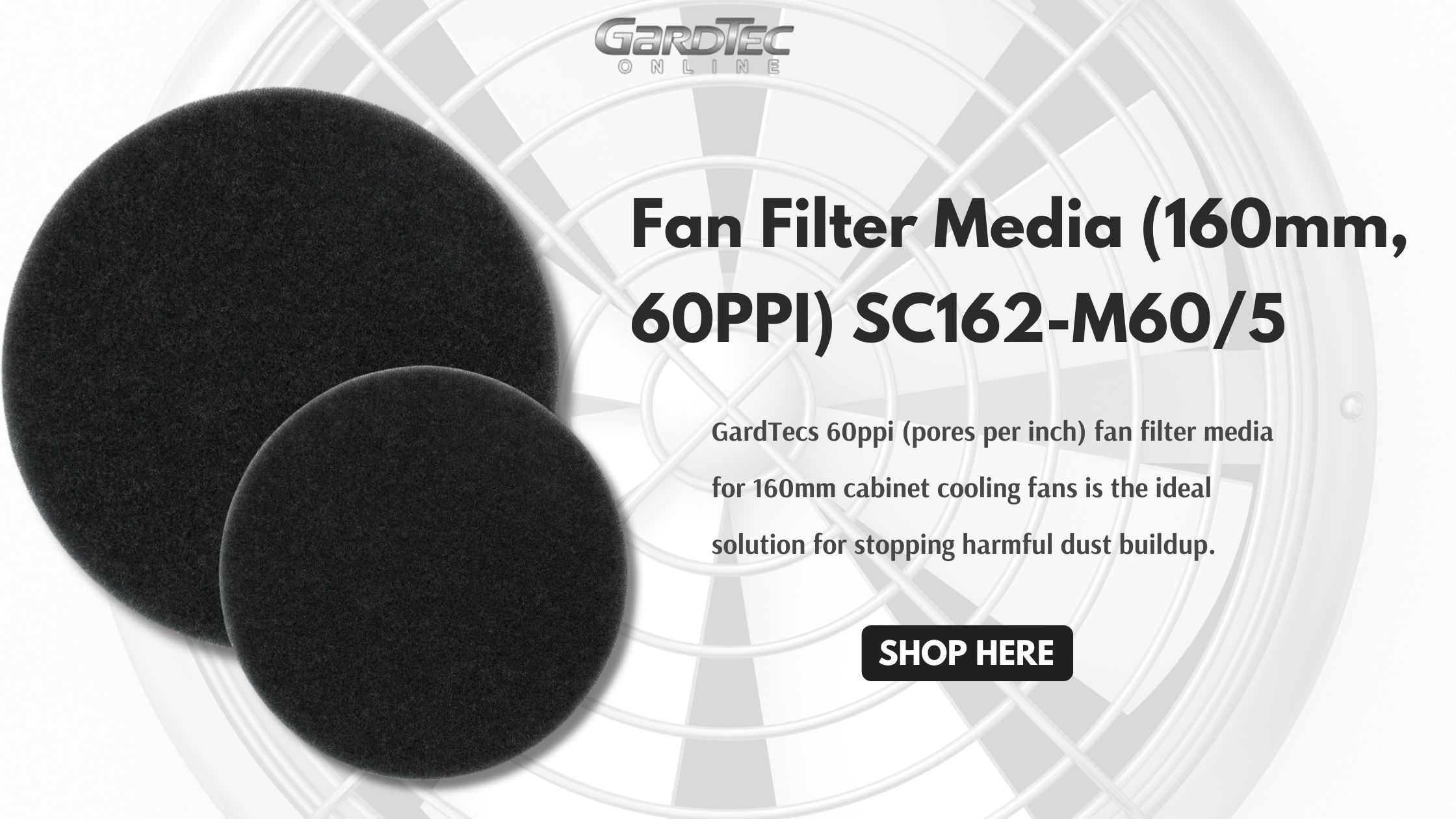
Fan Filter Media (160mm, 60PPI) SC162-M60/5
In industrial environments, airflow management is critical. Electrical enclosures, control panels, machinery cabinets, and ventilation systems all rely on clean, unrestricted airflow to maintain performance and prevent overheating. At the heart of this process is fan filter media, a component that often determines how well cooling systems perform over time.
One of the most common questions engineers and facility managers ask is whether 60PPI fan filter media is better than lower-density filters for industrial use. The answer depends on filtration needs, operating conditions, and maintenance expectations. This guide breaks down the differences in a clear, practical way—helping you make the right choice for your industrial application.
Understanding Fan Filter Media and Filter Density
Fan filter media is designed to trap dust, dirt, and airborne contaminants before they enter equipment enclosures. This protects sensitive internal components such as circuit boards, power supplies, and cooling fans.
The key measurement used to describe filter media is PPI (Pores Per Inch).
- Higher PPI = finer filtration
- Lower PPI = higher airflow with less filtration
A 60PPI fan filter is considered high-density, while lower-density options typically range from 20PPI to 40PPI.
What Is 60PPI Fan Filter Media?
A 60PPI fan filter has tightly packed pores that capture smaller particles more effectively than lower-density filters. It is commonly used in industrial settings where dust control, equipment protection, and air quality are top priorities.
Key Characteristics of 60PPI Fan Filter Media:
- Fine filtration for dust and airborne particles
- Enhanced protection for sensitive electronics
- Reduced internal contamination
- Requires more frequent cleaning or replacement
Because of its fine structure, 60PPI filter media is widely used in industrial fan filter applications where reliability and equipment longevity matter.
What Are Lower-Density Fan Filters?
Lower-density filters (20–40PPI) have larger pores that allow more air to pass through with minimal resistance. While they do not trap fine dust as effectively, they excel in environments where airflow is the primary concern.
Common Features of Lower-Density Filters:
- Higher airflow capacity
- Lower pressure drop across the filter
- Less frequent maintenance
- Reduced filtration efficiency
These filters are often chosen for less dusty industrial spaces or where airflow demands are extremely high.
Comparison Table: 60PPI vs Lower-Density Fan Filter Media
| Feature | 60PPI Fan Filter Media | Lower-Density Filters (20–40PPI) |
|---|---|---|
| Filtration Level | High (fine dust capture) | Moderate (larger particles) |
| Airflow | Moderate | High |
| Equipment Protection | Excellent | Basic to moderate |
| Maintenance Frequency | Higher | Lower |
| Ideal Use | Dusty, sensitive environments | Clean or airflow-focused areas |
| Cooling Efficiency | Balanced with protection | Maximum airflow |
This comparison highlights that neither option is universally “better”—each serves a specific industrial purpose.
Which Is Better for Industrial Use?
When 60PPI Fan Filter Media Is the Better Choice
A 60PPI fan filter is ideal when protection is more important than raw airflow. It is commonly used in:
- Electrical control panels
- Automation cabinets
- Industrial electronics enclosures
- Manufacturing facilities with airborne dust
- Environments where downtime is costly
By preventing fine dust from entering enclosures, 60PPI filters help extend equipment life and reduce unexpected failures.
When Lower-Density Filters Make More Sense
Lower-density cooling fan filters are better suited for:
- Cleaner industrial environments
- Applications requiring maximum airflow
- Equipment that generates high heat but minimal dust
- Situations where maintenance access is limited
These filters allow cooling fans to operate at peak airflow, which can be beneficial in heat-intensive systems.
Impact of Fan Filter Density on Cooling Performance
Fan filter density directly affects cooling efficiency. Higher-density filters increase resistance, which can slightly reduce airflow. However, this trade-off is often worth it in industrial settings where dust buildup can cause overheating over time.
With lower-density filters, airflow remains high initially, but internal dust accumulation may eventually reduce cooling performance and increase maintenance costs.
The key is balance—choosing filter media that matches both environmental conditions and cooling requirements.
Long-Term Cost and Maintenance Considerations
While 60PPI filters may require more frequent cleaning or replacement, they often reduce long-term costs by:
- Protecting expensive components
- Minimizing fan wear
- Reducing system downtime
- Lowering the risk of electrical failures
Lower-density filters may appear more cost-effective upfront but can lead to higher internal cleaning and repair costs if dust infiltration becomes an issue.
Choosing the Right Fan Filter Media for Your Application
When selecting between 60PPI fan filter media and lower-density options, consider the following factors:
- Level of airborne dust
- Sensitivity of internal components
- Cooling airflow requirements
- Maintenance access and schedules
- Operational uptime requirements
In many industrial environments, a 60PPI industrial fan filter provides the best balance of protection and performance.
Conclusion: Making the Right Choice
There is no one-size-fits-all solution when it comes to fan filter media. A 60PPI fan filter excels in industrial environments where dust control and equipment protection are critical, while lower-density filters perform best in cleaner spaces with high airflow demands.
For most industrial applications—especially those involving electrical enclosures, automation systems, and sensitive electronics—60PPI fan filter media offers a safer, more reliable long-term solution.
Frequently Asked Questions (FAQ)
1. What does 60PPI mean in fan filter media?
60PPI refers to 60 pores per inch, indicating a fine, high-density filter that captures small particles.
2. Is 60PPI better than lower-density fan filters?
For dusty industrial environments and sensitive equipment, yes. For high-airflow needs in clean areas, lower-density filters may be better.
3. Do 60PPI fan filters reduce airflow?
They slightly restrict airflow compared to lower-density filters, but they provide superior dust protection.
4. How often should 60PPI fan filter media be cleaned?
Cleaning frequency depends on environmental conditions, but industrial settings may require regular inspection and maintenance.
5. Are lower-density filters suitable for industrial use?
Yes, especially in clean environments where airflow is the main priority.
6. Can fan filter density affect cooling fan lifespan?
Yes. Proper filtration reduces dust buildup on fan blades, extending fan lifespan.
7. Is 60PPI fan filter media reusable?
Many 60PPI filters can be cleaned and reused depending on material and contamination levels.
8. Which fan filter media is best for electrical enclosures?
60PPI fan filter media is commonly preferred due to its high protection level.







Post Comment