
Why Spray Foam Insulation Boosts Home Worth Beyond Savings
While spray foam is famous for reducing utility bills, its most profound impact on a home’s value comes from improvements to the building itself. Spray foam boosts a property’s value by fundamentally improving its quality, durability, and the health of its living environment. These are the high-value features that savvy homebuyers and appraisers are increasingly looking for. Beyond just saving money month-to-month, spray foam creates a structurally stronger, quieter, and healthier home, transforming it into a high-performance asset that stands out in a competitive market.
The conversation around insulation often stops at energy savings, but that’s only one part of the value equation. A home is more than just its operational costs; it’s a long-term investment in well-being and security. This article, with insights drawn from building performance experts and seasoned contractors, explores the powerful, often overlooked ways that spray foam insulation adds tangible worth to a property, making it a smarter, more valuable investment for the future.
A Healthier Home is a More Valuable Home
Today’s homebuyers are more conscious than ever of indoor air quality and the overall health of their living environment. A home with a history of mold or one that triggers allergies is a major liability. An expert spray foam insulation service directly addresses these concerns, turning a potential weakness into a strong selling point.
Its primary advantage is its ability to create a complete air seal. This monolithic barrier stops the uncontrolled flow of air between the outside and the inside of the home. This means that outdoor allergens like pollen, dust, and other pollutants are blocked from entering through the tiny gaps and cracks present in a home’s walls and attic. For families, especially those with children or members with respiratory issues, this feature is incredibly valuable.
Furthermore, closed-cell spray foam acts as a robust moisture barrier. It is waterproof and does not allow water vapor to pass through it. In areas like crawl spaces or foundation walls, this prevents the ground moisture that leads to mold and mildew. Preventing mold is far more valuable than dealing with it after the fact. A home that can be marketed as having a clean, dry, and healthy indoor environment is inherently worth more than one with potential air quality issues.
Bonus Tip: When preparing to sell a home with spray foam, it can be beneficial to have an indoor air quality test performed. A positive report provides documented proof of the healthy environment you’ve created, which can be a powerful tool for negotiation.
A Stronger, More Durable Structure
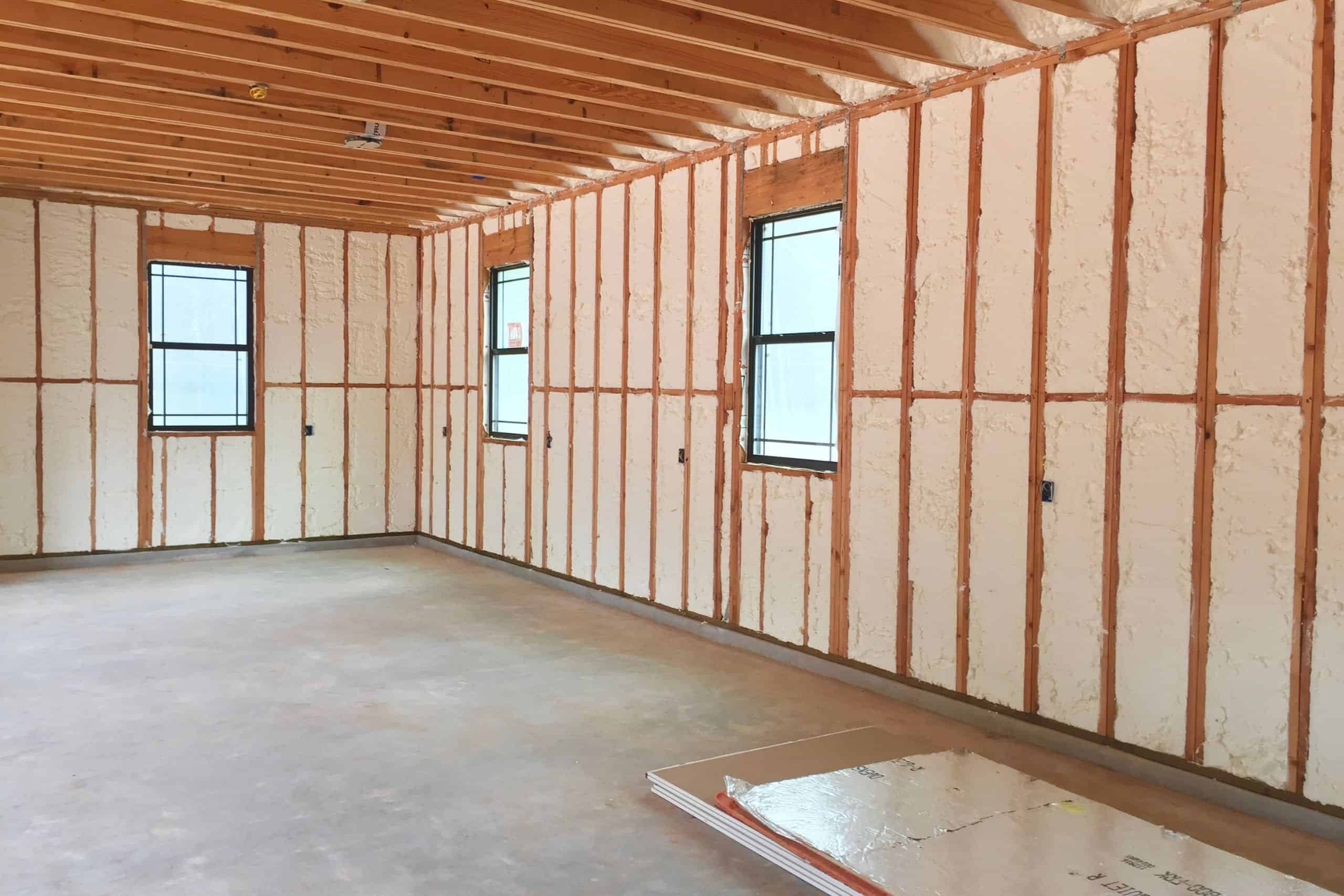
An often-overlooked benefit of closed-cell spray foam is its ability to add structural strength to a home. Unlike traditional insulation, which is simply placed into wall cavities, spray foam is applied as a liquid that expands and hardens into a rigid solid. In the process, it adheres tenaciously to the wood studs and sheathing of the walls and roof deck.
This adhesion effectively glues the building components together, significantly increasing their resistance to racking and shearing forces. This means a home with closed-cell spray foam is stronger and more resilient, particularly against high winds. This added structural integrity is a tangible upgrade to the building itself, not just an energy feature. It signals to a buyer that the home is built to a higher standard of durability.
Moreover, spray foam is a permanent material. It does not sag, settle, or degrade over time like some fibrous insulations can. This means the home’s performance and structural benefits will not decline. A buyer is purchasing a home with a feature that is designed to last for the life of the structure, reducing future maintenance concerns and adding to the long-term value of their investment.
The Underrated Value of Peace and Quiet
The quality of life within a home is a major driver of its perceived worth. A home that offers a peaceful escape from the noise of the outside world is a more desirable place to live. Spray foam insulation is an exceptional sound-dampening material, and this acoustic performance adds another layer of value.
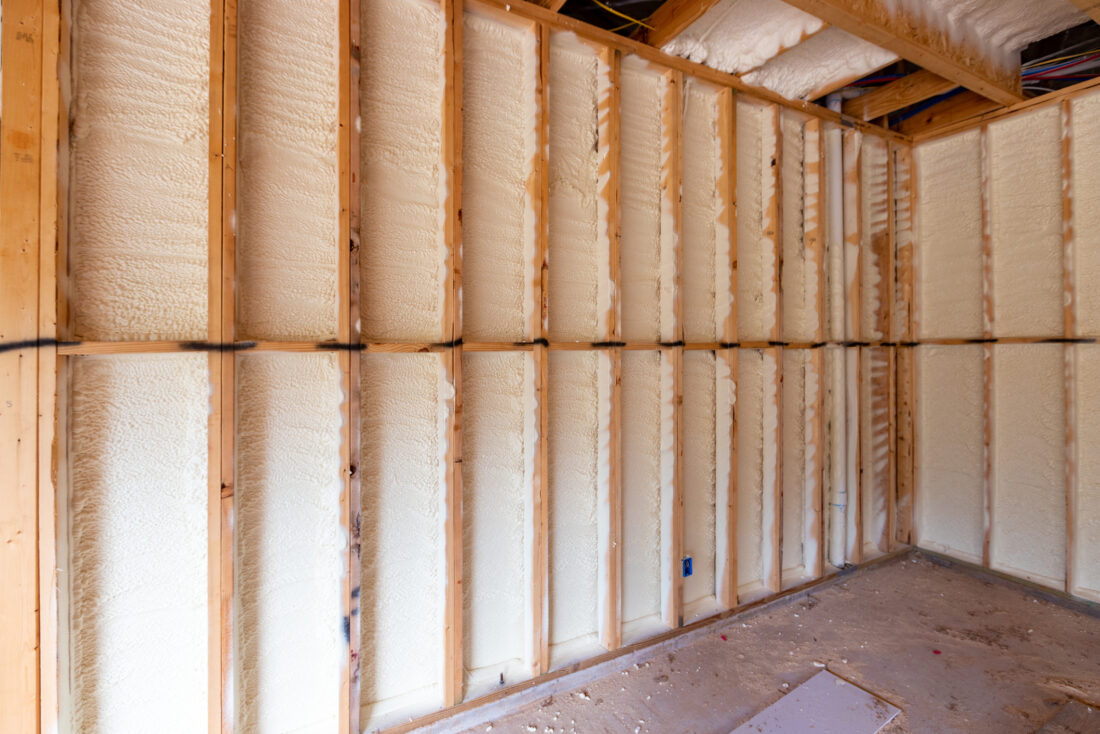
Because it forms a solid, seamless barrier, it is very effective at blocking airborne sound waves. Traditional insulation materials can absorb some sound, but they do little to stop noise from traveling through the air gaps in the wall assembly. Spray foam seals those gaps. The result is a noticeable reduction in the sound of traffic, neighbors, and general city noise. This feature is particularly valuable in densely populated areas, homes near busy roads, or those under flight paths. While it may be considered a “soft” benefit, a quieter home provides a higher quality of life, which is a very real and marketable component of its overall worth.
How Insulation Impacts Home Value Factors
The choice of insulation has a direct impact on several key factors that contribute to a home’s market value. Spray foam consistently outperforms traditional options in the areas that matter most to modern buyers.
|
Feature |
Traditional Insulation (Fiberglass/Cellulose) |
Spray Foam Insulation |
|---|---|---|
|
Energy Savings |
Good |
Excellent |
|
Indoor Air Quality |
Fair (allows air infiltration) |
Excellent (air seals the home) |
|
Moisture Control |
Poor (can support mold) |
Excellent (closed-cell is a vapor barrier) |
|
Structural Support |
None |
Good to Excellent (closed-cell adds rigidity) |
|
Sound Dampening |
Fair |
Excellent |
Things to Consider Before You Invest
To make sure your investment in spray foam translates to higher home worth, there are a few key considerations to keep in mind.
- Professional Installation is Crucial: The value of spray foam is entirely dependent on the quality of the installation. A poor job can create problems and will not be seen as an asset. It is essential to hire a certified, experienced, and professional spray foam contractor.
- Keep Your Documentation: When you have spray foam installed, keep all the paperwork. This includes the contract, information on the specific product used, and any warranties. This documentation is proof of the upgrade and can be provided to a home appraiser or potential buyer to justify a higher value.
- Market the Benefits: When it comes time to sell, don’t just list “new insulation.” Market the specific benefits. Use phrases like “high-performance, air-sealed home,” “low utility bills,” “superior indoor air quality,” and “sound-dampened for peaceful living.”
- ROI from Multiple Sources: Remodeling magazine’s annual Cost vs. Value report consistently shows that attic insulation upgrades are among the projects with the highest return on investment, often recouping over 100% of their cost at resale. This is because the value comes not just from the upgrade itself, but from the ongoing savings it provides.
Bonus Tip: Before you sell, gather a year’s worth of utility bills to show a potential buyer. Demonstrating the low energy costs in black and white provides undeniable proof of the home’s efficiency and value.
Answering Your Questions About Spray Foam and Home Value
Will a home appraiser recognize the value of spray foam?
Increasingly, yes. As energy efficiency and building science become more mainstream, appraisers are becoming more educated on the value of high-performance features. Providing clear documentation of the upgrade will help them accurately assess its contribution to the home’s worth.
Can spray foam make a house harder to sell?
On the contrary, it is a powerful selling point. It signals to buyers that the home is modern, well-maintained, comfortable, and cheap to operate. These are all highly desirable attributes in any housing market.
Is this a better investment for resale than a cosmetic upgrade like new countertops?
While cosmetic upgrades can have a strong initial appeal, they are subject to trends and personal taste. An upgrade to the home’s core performance, like spray foam insulation, provides a lasting, objective value that any homeowner will benefit from. It often has a higher and more reliable return on investment.
Does the type of foam (open-cell vs. closed-cell) affect the value?
Yes. While both are excellent insulators, closed-cell foam typically adds more value. Its higher R-value, structural strengthening properties, and built-in vapor barrier make it a more comprehensive and technically superior product, which is reflected in its contribution to home worth.
How should I market spray foam to potential buyers?
You will definitely want to! It is one of the best features to highlight. It tells a story of a home that is not just visually appealing, but is also built to a higher standard of performance, health, and durability.
An Investment in the Core Quality of Your Home
Spray foam insulation boosts a home’s worth far beyond the monthly energy savings because it improves the fundamental quality of the asset. The result is a structure that is more resilient, provides a healthier living space, and offers superior comfort. These are the core characteristics that define a premium property. By investing in the performance of the building envelope, you are not just cutting costs; you are making a strategic upgrade that will pay dividends in comfort, quality of life, and ultimately, a higher market value.
Understand the Value for Your Property
For homeowners ready to explore these benefits, the next logical step is a professional consultation. An expert can assess your property, explain the tangible benefits you can expect, and show how a spray foam upgrade could impact your home’s specific value. For those in the Las Vegas area looking for a professional evaluation, the team at Supreme Spray Foam LV can provide a detailed consultation. They can be reached by phone at (702) 904-9895 or via email at [email protected].
Reviewer: Michael Carter reviewed this article using insight gained over 12 years in the spray foam business. His feedback focused on helping contractors reach new customers without overcomplicating their message.






Post Comment