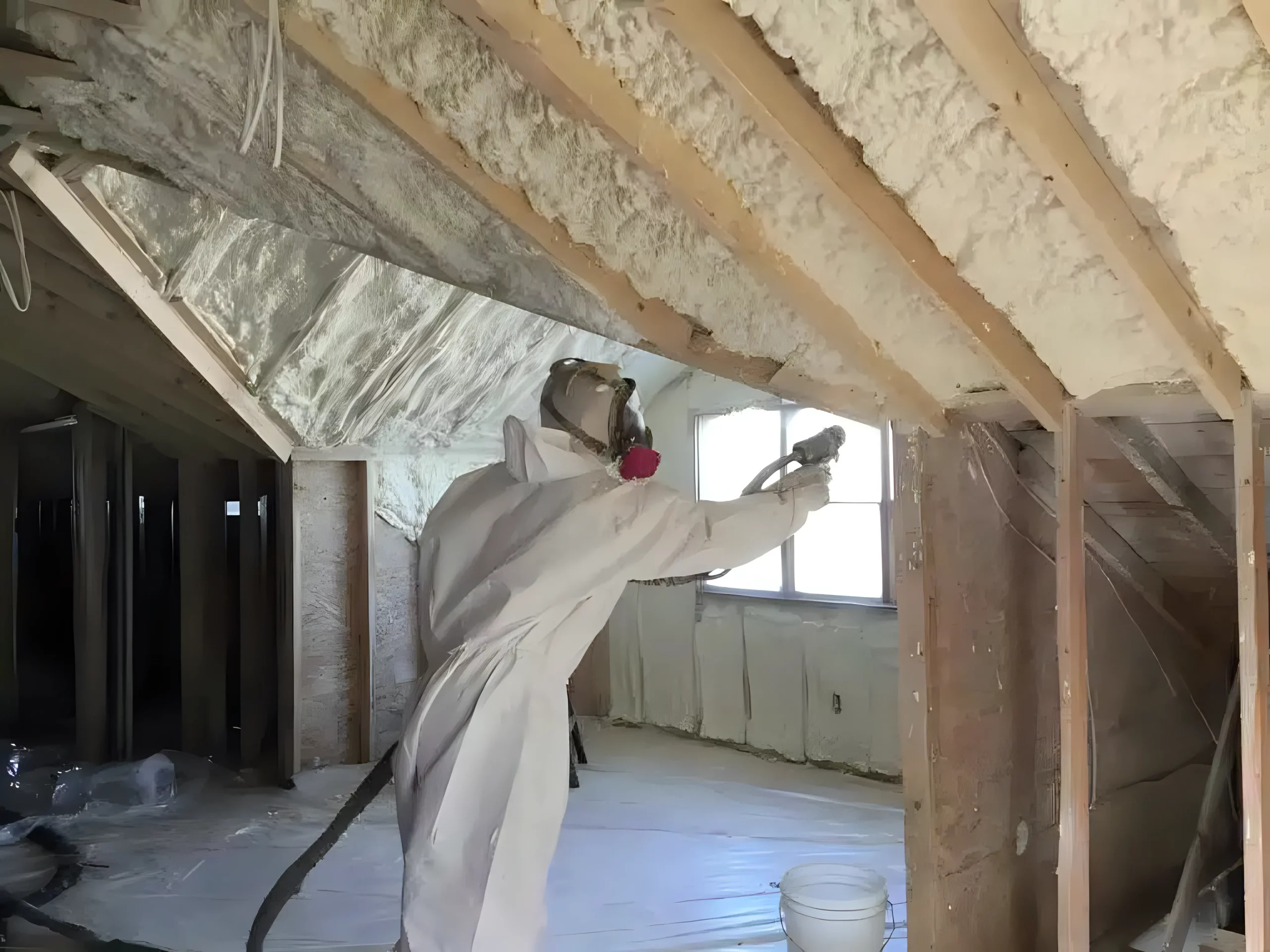
Why Closed-Cell Spray Foam Is Central to Energy Progress
Closed-cell spray foam stands at the forefront of energy-efficient construction because it is the only residential material that functions as a high-density thermal insulator, a complete air barrier, and a vapor retarder in a single application. As building codes and energy standards become stricter, the industry focuses less on simple thickness and more on total envelope performance. Closed-cell spray foam insulation effectively addresses the physical movement of heat and moisture, making it the standard for net-zero and high-performance homes.
Building science experts recognize that the future of energy conservation relies on sealing the structure rather than just adding layers of fluff. By eliminating air leakage and resisting heat transfer with the highest R-value per inch available, closed-cell foam reduces the mechanical load on heating and cooling systems.
This shift enables homes to use less energy, supporting the broader goal of reducing grid dependence and carbon footprints.
Modern High-Performance Insulation
To understand why this material is essential to modern energy goals, one must examine its physical properties. Closed-cell foam consists of millions of microscopic bubbles that are completely intact and filled with an insulating gas. This structure makes the material rigid and impermeable, unlike open-cell foam or fiberglass, which allows air to pass through.
Maximizing Thermal Resistance
Space is often a limiting factor in residential design, particularly in retrofits or modern homes with complex roof lines. Closed-cell foam offers an R-value of approximately R-6 to R-7 per inch, which is nearly double that of traditional materials. This allows builders to achieve maximum thermal resistance in shallow wall cavities or narrow roof rafters without altering the framing dimensions.
- Space Efficiency: Achieves code compliance in 2×4 walls where fiberglass fails.
- Continuous Coverage: Eliminates thermal bridging by covering the studs in some applications.
- Consistent Performance: Does not sag or settle, maintaining its R-value for the building’s life.
The Air Barrier Advantage
Energy progress is impossible without addressing air leakage, which accounts for up to 40 percent of a home’s energy loss. Closed-cell foam expands to fill every void and adheres tenaciously to the substrate. This creates a monolithic seal that prevents conditioned air from escaping and blocks outdoor drafts completely.
Bonus Tip: Structural rigidity
Because closed-cell foam is rigid and dense, it adds significant structural strength to the building. When applied to the underside of a roof deck, it bonds the sheathing to the rafters, increasing wind uplift resistance by up to 300 percent. This makes the home safer during severe weather events.
Reducing Carbon Footprint
By lowering the home’s energy demand, closed-cell foam directly reduces the amount of fossil fuels burned to generate electricity. Over the lifespan of a house, this reduction is massive, far outweighing the energy required to produce the insulation.
Moisture Management Capabilities
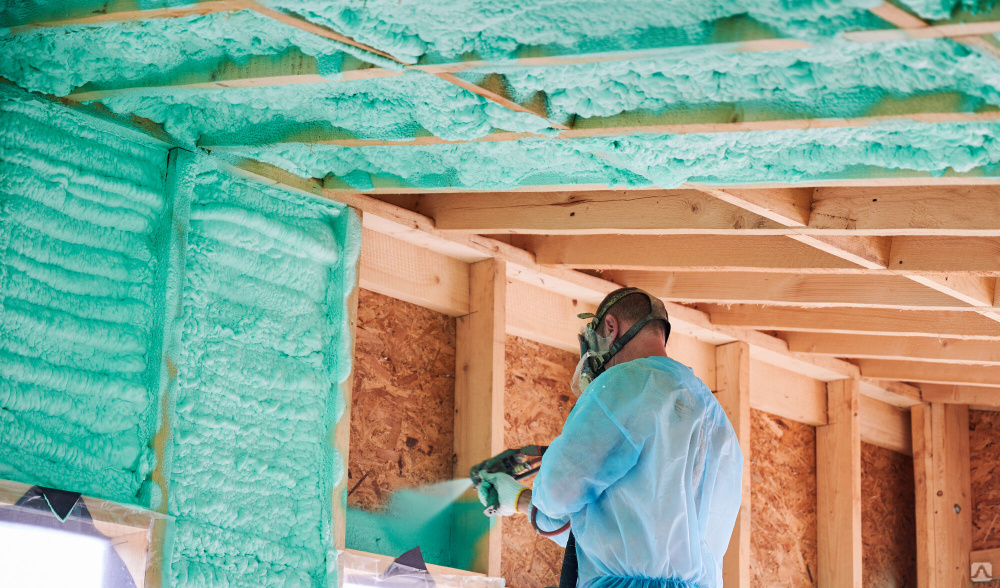
Water is a primary enemy of energy efficiency because wet insulation conducts heat, leading to structural decay. Closed-cell spray foam acts as a Class II vapor retarder, meaning it prevents moisture from entering the wall cavity. This capability is vital for maintaining a durable, healthy building envelope in humid climates.
Preventing Condensation and Mold
In modern, airtight homes, managing internal and external moisture is critical to prevent “sick building syndrome.” Closed-cell foam keeps the condensing surface warm, preventing the formation of liquid water inside walls. This eliminates the environmental conditions required for mold growth, ensuring indoor air remains clean and safe without excessive mechanical dehumidification.
Comparison of Insulation Performance Metrics
|
Feature |
Closed-Cell Spray Foam |
Open-Cell Spray Foam |
Fiberglass Batts |
|---|---|---|---|
|
R-Value per Inch |
6.0 – 7.0 |
3.5 – 3.8 |
3.1 – 3.4 |
|
Air Barrier |
Excellent |
Excellent |
Poor |
|
Vapor Retarder |
Yes (Class II) |
No (Permeable) |
No |
|
Water Resistance |
Waterproof |
Absorbs Water |
Absorbs Water |
|
Structural Strength |
High (Rigid) |
None (Soft) |
None |
|
Space Required |
Low |
Moderate |
High |
Things to Consider Before Making a Decision
While closed-cell foam offers superior performance, property owners must evaluate the initial investment against long-term goals. It is the most expensive insulation option upfront, but the return on investment comes in the form of lower utility bills and avoided maintenance costs. Additionally, because it creates such a tight seal, mechanical ventilation is often required to ensure fresh air exchange within the home.
Market Data on Efficiency Trends
Data from the U.S. Department of Energy suggests that upgrading to a sealed, high-performance insulation system can reduce heating and cooling costs by 50 percent compared to older standards. Furthermore, real estate market trends indicate that certified energy-efficient homes sell faster and at a premium. These figures highlight that energy efficiency is a financial asset as well as an environmental one.
Common Questions About Closed-Cell Foam
Homeowners often have specific concerns regarding the application and permanence of the product. Addressing these inquiries helps clarify why this material is the correct choice for forward-thinking construction.
Is it environmentally friendly?
Modern closed-cell foams use blowing agents with extremely low Global Warming Potential (GWP). Combined with the massive energy savings over the home’s life, it is considered a sustainable building choice.
Can it be used in flood zones?
Yes, closed-cell foam is the only insulation approved by FEMA as a flood-resistant material. It can withstand direct contact with floodwaters without absorbing contaminants or losing its insulating properties.
Summary
Closed-cell spray foam is the engine driving the shift toward high-performance, resilient housing. Solving thermal, air, and moisture challenges with a single material enables homes to meet modern energy standards that traditional materials cannot. For homeowners looking to future-proof their property, it represents the most effective step toward energy independence.
Professional Insulation Upgrades
Premier Insulation specializes in helping homeowners navigate the transition to high-efficiency living. Their team assesses the unique requirements of each structure to determine where closed-cell foam will have the most significant impact. They provide expert installation services that maximize the performance of the building envelope.
For those interested in reducing their carbon footprint and monthly expenses, the company welcomes inquiries. Contact the team at (229) 554-3939 or via email at [email protected] to discuss project details and schedule an evaluation.
Frequently Asked Questions
Understanding the technical nuances ensures that homeowners know exactly what they are purchasing.
Does closed-cell foam shrink?
When applied correctly by trained professionals, high-quality closed-cell foam is dimensionally stable and does not shrink. It remains bonded to the framing indefinitely.
Can I install it myself?
No, closed-cell foam requires sophisticated equipment to heat and mix the chemicals at precise ratios. It is strictly a professional application.
How does it affect roof shingles?
Studies show that unvented attics with spray foam increase shingle temperature by only a few degrees, which typically does not impact the lifespan of quality roofing materials.
Is it a soundproofing material?
While it does reduce noise, open-cell foam is generally better for acoustics. Closed-cell foam is chosen primarily for thermal and structural performance.
Reviewer: Jack Parker, a spray foam professional with 7 years of experience, reviewed this post and helped improve sections dealing with brand clarity and customer communication.








Post Comment