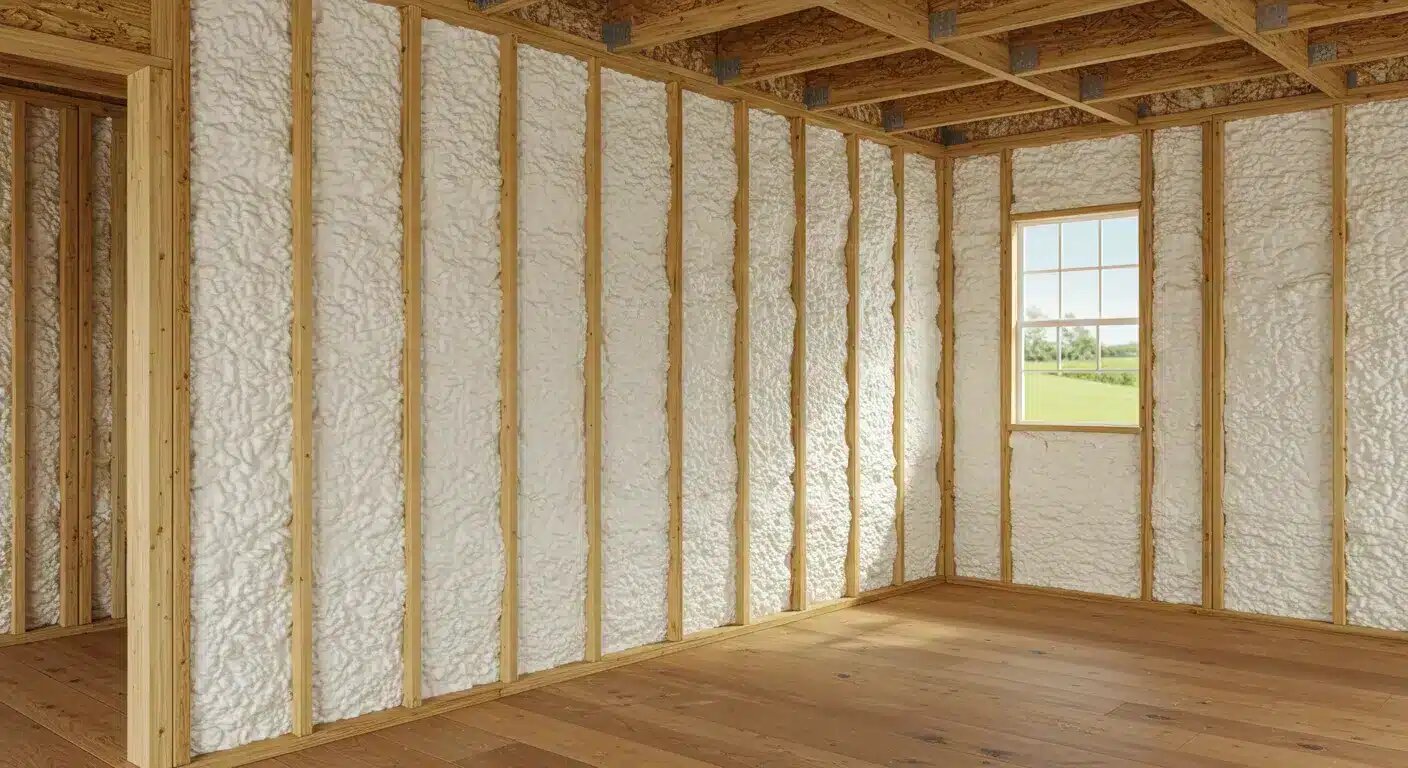
The Durability Edge of Residential Spray Foam Insulation
While many homeowners are drawn to spray foam for its impressive energy efficiency, its long-term durability is an equally compelling benefit. Unlike traditional insulation that can sag, settle, or degrade, spray foam is an inert polymer that, once cured, becomes a fixed part of the home’s structure. This article, based on extensive building science and industry experience, will explore the specific characteristics that give spray foam its remarkable staying power, protecting a home’s structural integrity for decades.
It Never Sags, Settles, or Decomposes
One of the most common failures of traditional insulation is its tendency to degrade over time. Fiberglass batts can slump down inside wall cavities, leaving uninsulated gaps at the top. Blown-in cellulose or fiberglass can settle and compact, reducing its thickness and its R-value. This degradation happens slowly, but over 10 or 15 years, it can lead to a significant decline in a home’s thermal performance.
Residential spray foam insulation eliminates this problem. When professionally installed, it forms a solid, custom-fit insulation that is chemically and physically stable.
- Closed-Cell Foam: This type cures into a dense, rigid plastic. It will not shrink, settle, or sag. It becomes a permanent part of the wall or roof assembly.
- Open-Cell Foam: While softer and more flexible, open-cell foam still adheres tenaciously to the surrounding structure and retains its shape and position for the life of the home.
Because spray foam doesn’t break down, its thermal performance remains consistent. The R-value a homeowner gets on the day of installation is the same R-value they will have 30 years later. This is a level of reliability that older insulation technologies simply cannot match. The expected lifespan of spray foam is often cited as 80 years or more.

Adding Structural Strength to the Building
Beyond its insulating properties, closed-cell spray foam provides an additional durability benefit that is unique among common insulation materials: it adds structural strength. Because it is so dense and adheres so strongly to the surfaces it’s applied to, it essentially glues the building components together.
When applied in wall cavities, it bonds the studs to the sheathing, increasing the wall’s resistance to racking and shear forces. When applied to the underside of a roof deck, it can more than double the roof’s resistance to being lifted off by high winds. This is a significant advantage, particularly in regions that experience strong windstorms or seismic activity. In fact, a number of studies have demonstrated this strengthening effect, making it a recognized benefit in modern building science.
Bonus Tip: In older homes, the added rigidity from closed-cell spray foam can help reduce floor squeaks, nail pops, and other minor structural noises by stiffening the building assembly.
Superior Resistance to Moisture Damage
Moisture is one of the biggest threats to a home’s durability. It can lead to mold, mildew, and the eventual rot and decay of wood framing. Closed-cell spray foam is an exceptional defense against moisture intrusion.
Its chemical structure is “hydrophobic,” meaning it repels water. It is also a non-porous material, and when applied at a sufficient thickness (typically around 2 inches), it acts as a full vapor barrier. This prevents damp air from moving through the wall or roof assembly and condensing on cold surfaces. This is a stark contrast to fiberglass, which can lose its R-value when it gets damp, and cellulose, which can absorb and hold moisture, potentially leading to serious problems.
This moisture resistance makes closed-cell foam the ideal choice for below-grade applications like basements and crawl spaces. By insulating the foundation walls, it stops ground moisture from wicking into the home, protecting the structure’s foundation for the long term.
An Inert Barrier That Deters Pests
While no insulation is completely “pest-proof,” spray foam offers a durable advantage here as well. First, as an inert plastic polymer, it offers no nutritional value to rodents, termites, or other insects. They are not attracted to it as a food source.
More importantly, spray foam’s greatest strength against pests is its ability to create a complete air seal. By filling every crack and crevice, it physically blocks the small entry points that pests often use to get into a home’s walls and attic. Traditional fiberglass batts, on the other hand, are notoriously easy for rodents to tunnel through and use as nesting material.
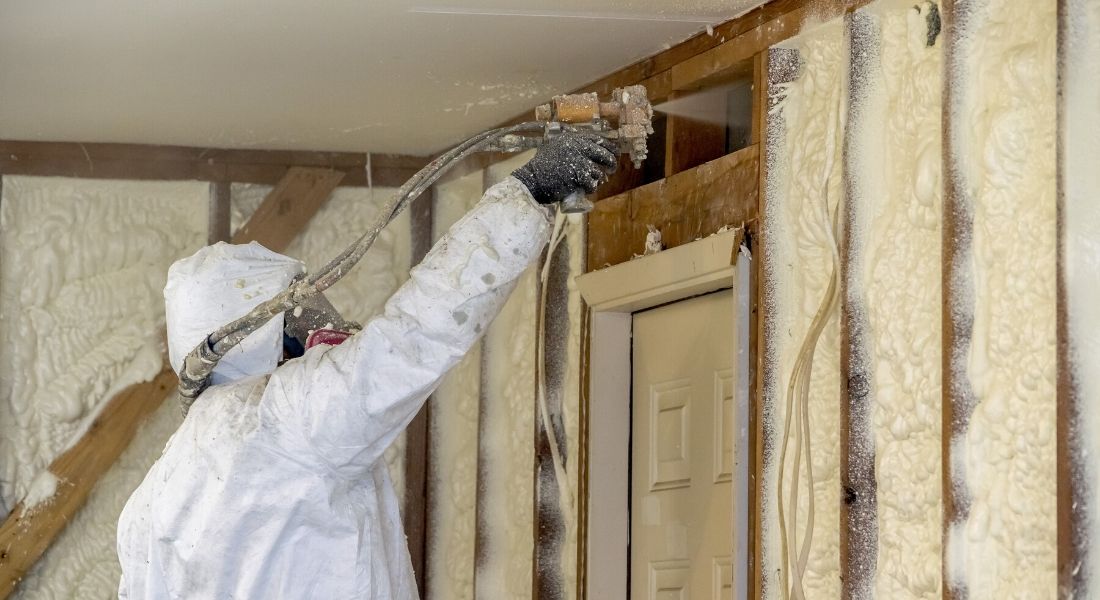
Durability Comparison of Common Insulation Types
The differences in long-term performance become clearer when the materials are compared side-by-side.
|
Feature |
Closed-Cell Spray Foam |
Fiberglass Batts |
Blown-In Cellulose |
|---|---|---|---|
|
Expected Lifespan |
80+ years |
15-30 years |
20-30 years |
|
Settling or Sagging |
None |
High probability |
High probability |
|
Moisture Resistance |
Excellent (Vapor Barrier) |
Poor (Loses R-value) |
Poor (Can hold moisture) |
|
Structural Support |
Yes (Adds rigidity) |
None |
None |
|
Pest Resistance |
Good (Seals entry points) |
Poor (Used for nesting) |
Fair (Treated, but can be moved) |
Things to Consider Before Making a Decision
The exceptional durability of spray foam is directly tied to the quality of its installation. This is not a forgiving product, and a poor application can compromise all of its long-term benefits. An off-ratio mix or improper surface preparation can lead to a foam that shrinks, pulls away from the studs, or never fully cures. For this reason, choosing an experienced and certified installer is the most important step a homeowner can take.
The permanence of spray foam is also something to consider. Because it adheres so strongly, it is very difficult to remove. This is a positive for durability, but it means homeowners should be certain about their home’s layout, as moving plumbing or electrical wiring within a foamed wall is more complex than with traditional insulation.
Bonus Tip: Always ask a potential contractor about their quality control process. A professional crew will have systems for monitoring the foam’s temperature, pressure, and ratio throughout the entire job to ensure a stable and durable final product.
Common Questions About Spray Foam Durability
Does the R-value of spray foam decrease over time?
For modern closed-cell foams, any initial change in R-value is minimal and happens very quickly. The foam then stabilizes, and its long-term thermal resistance (LTTR) is what is reported. It provides a consistent R-value for decades.
Can spray foam be damaged by water from a roof leak?
Closed-cell spray foam is water-resistant and will not be damaged by a leak. It can actually help limit the spread of water. Open-cell foam will get wet, but it is designed to dry out without losing its shape or performance once the leak is fixed.
Is spray foam flammable?
Spray foam is a combustible plastic, but it is manufactured with fire retardants to meet strict building code requirements. In any living space, it must be covered by a 15-minute thermal barrier, such as half-inch drywall, for fire safety.
Will it crack if the house settles or shifts?
Open-cell foam is flexible and can easily accommodate the natural expansion and contraction of a building. Closed-cell foam is rigid, but its incredible bond strength makes it highly resistant to cracking from minor structural movement.
What kind of warranty comes with spray foam?
Most manufacturers offer a limited lifetime warranty on the product itself, guaranteeing that it will not break down and will retain its physical properties. A reputable installer will also provide a warranty on their workmanship.
A Long-Term Investment in Your Home’s Future
The durability edge of spray foam insulation makes it more than just a purchase; it’s a permanent upgrade to a home’s structure. By resisting the forces of time, moisture, and physical degradation, it provides a level of performance and peace of mind that other insulation materials cannot. For homeowners looking for an insulation solution that will stand the test of time, a professional consultation is the best place to start. An expert can assess a home’s specific needs and explain how a durable material can protect the building for decades.
The team at Cascadia Spray Foam Insulation of Seattle specializes in high-performance, long-lasting insulation systems. They can be contacted for a thorough home evaluation at [email protected] or (425) 386-3500.
Reviewer: Olivia Thompson has spent 10 years working in spray foam insulation, helping companies grow their visibility. She reviewed this article and provided valuable suggestions on how to better align the content with the needs and expectations of customers, ensuring it resonates with the target audience.







Post Comment