
Spray Foam Roofing Services and Their Role in Leak Prevention
Spray foam roofing has become a preferred choice for residential and commercial building owners seeking long-term leak prevention. Known for its seamless application and insulating qualities, this roofing system delivers more than just waterproofing—it supports energy efficiency and structural integrity.
This article explores how spray foam roofing works, why it’s effective against leaks, and what property owners should understand before installation or maintenance.
How Spray Foam Roofing Prevents Leaks
Spray foam roofing forms a continuous, monolithic barrier over a roof’s surface. This eliminates joints, seams, or fasteners where water typically penetrates.
Seamless Surface Without Vulnerabilities
Unlike shingles, metal panels, or membrane systems, spray foam (SPF) roofs are applied in liquid form and expand into a uniform layer.
- No overlaps
- No mechanical fasteners
- No open edges
Full Adhesion to Substrate
The foam bonds directly to most roofing materials, including:
- Metal
- Concrete
- Wood
- Modified bitumen
This adhesion removes air gaps or voids where moisture might accumulate and cause deterioration over time.
Waterproof Top Coating
After the foam cures, a protective elastomeric coating is applied.
- Reflects UV radiation
- Resists ponding water
- Maintains flexibility during temperature swings
Together, these features form a robust system designed to repel water infiltration.
Key Benefits Beyond Leak Protection
Beyond sealing out water, spray foam roofing offers added advantages that contribute to its growing popularity.
Improved Insulation Performance
Closed-cell spray foam roofing has a high R-value, helping maintain indoor temperatures and reduce HVAC costs.
Lightweight Yet Strong
SPF roofing adds minimal load to structures compared to built-up or tile systems, making it ideal for retrofits and aging buildings.
Long Lifespan with Proper Maintenance
With routine recoating every 10–15 years, SPF systems can last over 30 years without needing a full tear-off.
Application Process of Spray Foam Roofing
Understanding how spray foam roofing is installed helps explain its effectiveness in leak prevention.
Step 1: Surface Preparation
- Remove debris, dust, and old coatings
- Ensure dry substrate to promote foam adhesion
Step 2: Foam Application
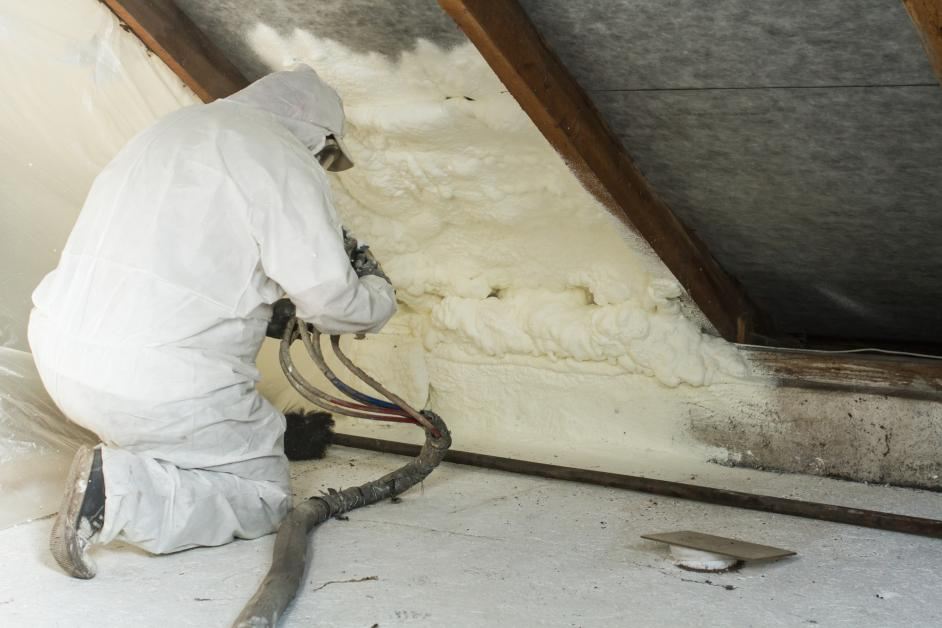
Using specialized equipment, installers apply the two-part liquid mixture. It expands rapidly into rigid foam.
- Applied in 1.5–2.5 inch layers
- Adjusted to slope for drainage
Step 3: Protective Coating
A UV-resistant elastomeric coating is applied in multiple layers.
- Silicone or acrylic-based
- Often embedded with granules for traction and wear resistance
This coating seals the foam and adds durability to the surface.
Spray Foam vs. Other Leak Prevention Roofing Options
To understand how spray foam compares to alternatives, here’s a direct comparison:
|
Feature |
Spray Foam Roofing |
Modified Bitumen |
TPO / PVC Membranes |
|---|---|---|---|
|
Seamless |
Yes |
No |
No |
|
R-Value |
High (Closed-cell) |
Low |
Low |
|
UV Protection |
With coating |
Requires coating |
Built-in |
|
Leak Resistance |
Excellent |
Moderate |
Good |
|
Maintenance Frequency |
Every 10–15 years |
5–7 years |
7–10 years |
|
Application Disruption |
Minimal |
Medium |
Medium |
Common Problems Spray Foam Solves
Beyond leaks, spray foam roofing addresses a variety of performance issues.
Ponding Water
The foam can be contoured to slope toward drains during installation, helping eliminate pooling that causes premature wear in flat roof systems.
Thermal Bridging
Spray foam’s continuous layer eliminates gaps that typically allow heat transfer at seams or fasteners.
Air Infiltration
The airtight seal reduces drafts and energy loss, helping HVAC systems work more efficiently.
Best Use Cases for Spray Foam Roofing
Spray foam roofing fits a wide range of building types, but certain scenarios benefit most from its properties.
Older Flat Roofs
Ideal for retrofits where removing old roofing is costly or impractical.
Commercial Warehouses
Helps control internal temperature swings and protects stored inventory from water damage.
High-Humidity Environments
Its moisture resistance prevents microbial growth and rot in areas with frequent rain or humidity.
Maintenance and Inspection Tips
While SPF roofing is durable, regular upkeep ensures maximum performance and leak prevention.
Visual Inspections
Check after severe weather for cracks, punctures, or signs of coating wear.
Recoating Schedule
Plan for reapplication of topcoat every 10–15 years based on wear conditions.
Keep Roof Clean
Remove debris and organic material that could trap moisture or puncture the surface.

Common Questions
How long does spray foam roofing prevent leaks?
When installed and maintained correctly, spray foam roofing can remain watertight for 30+ years. Its seamless design eliminates weak points, while the coating resists weathering.
Can spray foam be applied over existing roofs?
Yes, in many cases spray foam can be applied directly over existing substrates, reducing labor and waste. Compatibility depends on the condition and material of the current roof.
What happens if the coating wears down?
Without the protective topcoat, the foam may degrade under UV exposure. Regular recoating is necessary to preserve the integrity of the system and prevent leaks.
Is spray foam roofing suitable for sloped roofs?
It can be used on low-slope roofs, but isn’t typically applied on steep-pitched systems due to runoff and adhesion challenges.
Conclusion
Spray foam roofing offers a reliable, long-term solution for leak prevention in both residential and commercial buildings. Its seamless application, strong adhesion, and reflective coating work together to form a high-performance barrier against moisture. Beyond leaks, this system improves energy efficiency and structural performance—making it a valuable investment for property owners.
Staying proactive with maintenance and working with experienced Spray Foam Insulation Contractors ensures your system continues delivering value well beyond the initial installation. With proper care, this system becomes a resilient shield against water damage and temperature extremes for decades.
FAQs
Does spray foam roofing hold up to heavy rain? Yes. When cured and coated, spray foam roofs resist rain, wind-driven water, and minor pooling due to their continuous, closed-cell structure.
How often does a spray foam roof need to be checked? Ideally, inspections should be done twice a year—once before winter and once after the rainy season—to ensure no damage has occurred.
Can animals damage a spray foam roof? Small animals rarely damage SPF roofing, but birds or rodents may affect the surface if protective coatings are not properly applied or maintained.
What are signs of spray foam roof failure? Signs include cracks in the foam, peeling coating, discoloration, and areas where water pools or doesn’t drain as expected.
Is spray foam roofing compliant with energy codes? Yes. Spray foam often exceeds minimum R-value requirements and contributes to energy code compliance, especially when paired with reflective coatings.
Reviewer
Michael Carter reviewed this article using insight gained over 12 years in the spray foam business. His feedback focused on helping contractors reach new customers without overcomplicating their message.








Post Comment