
Is the Blown-In Blanket System a Good Insulation Solution for Large Homes?
The Blown-In Blanket System (BIBS) is generally an excellent insulation solution for large homes due to its superior coverage, energy efficiency benefits, and cost-effectiveness when considering total square footage. This system provides consistent R-values throughout wall cavities and attic spaces while effectively sealing hard-to-reach areas that are common in larger properties. For homeowners with substantial square footage, BIBS typically delivers better long-term energy savings compared to traditional batts, with installation costs often ranging between $1.50-$3.00 per square foot depending on the region and material used.
Large homes face unique insulation challenges including numerous penetration points, complex architectural features, and significant temperature differences between floors. The Blown-In Blanket System addresses these issues by creating a seamless thermal envelope that reduces air leakage and thermal bridging commonly found in spacious residences.
How the Blown-In Blanket System Works
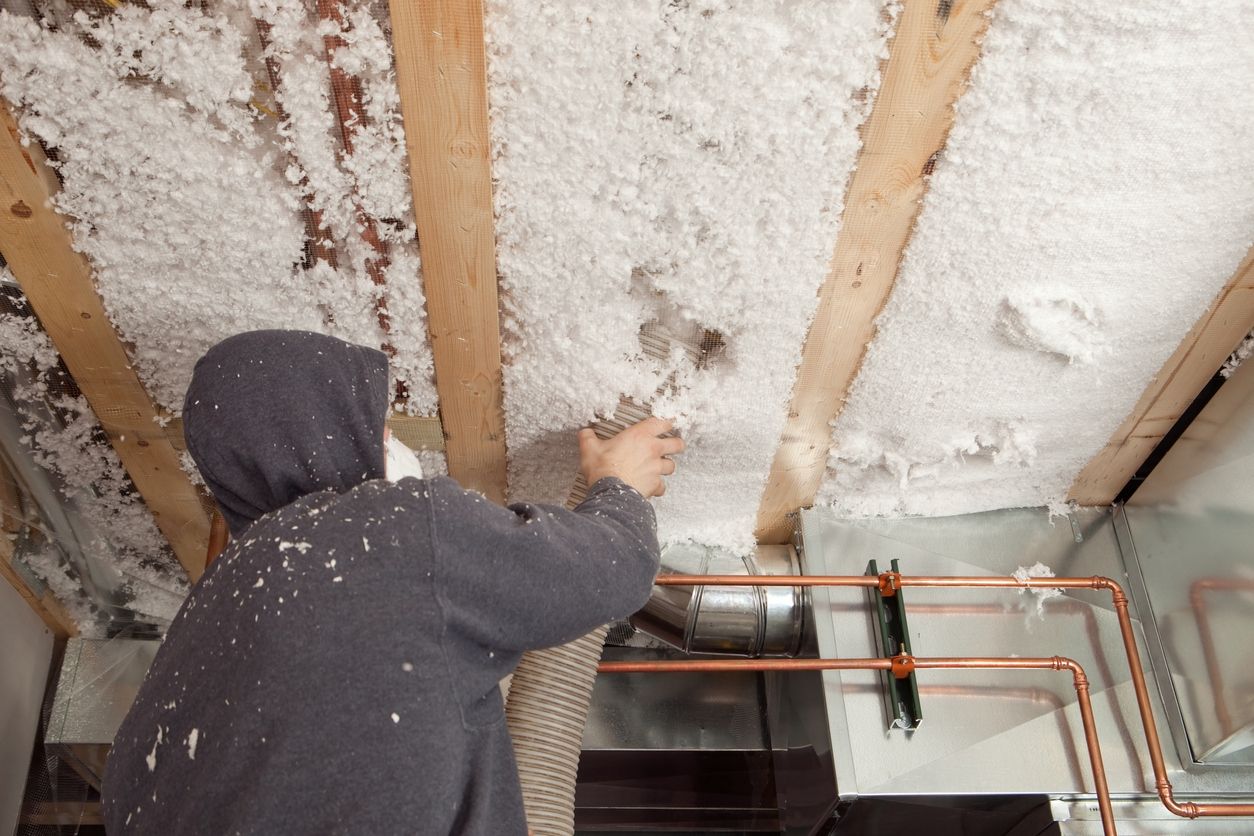
The Blown-In Blanket System combines specialized netting with loose-fill insulation materials to create a comprehensive thermal barrier. Unlike traditional batting, BIBS is installed by securing a fabric mesh to wall cavities, then blowing insulation material behind this netting until reaching the desired density.
This installation method ensures complete coverage in wall cavities, eliminating the gaps and compressions common with traditional batting installation. The process requires specialized equipment and trained professionals to achieve optimal density and performance.
Bonus Tip: When contractors calculate the necessary material for your large home, they factor in settling rates specific to your climate zone, as material compression over time can affect long-term performance.
Insulation Material Options for BIBS
The Blown-In Blanket System can utilize several different insulation materials, each offering distinct advantages for large homes.
|
Material |
R-Value per Inch |
Cost per sq.ft. |
Environmental Profile |
Moisture Resistance |
Fire Resistance |
|
Fiberglass |
2.2-2.7 |
$1.50-$2.00 |
Made from recycled glass |
Poor (needs vapor barrier) |
Non-combustible |
|
Cellulose |
3.2-3.8 |
$1.75-$2.25 |
Made from recycled paper |
Moderate (treated) |
Fire-resistant (treated) |
|
Mineral Wool |
3.0-3.3 |
$2.25-$3.00 |
Made from natural minerals |
Excellent |
Excellent |
For large homes, cellulose often provides the best combination of thermal performance and cost-effectiveness, while mineral wool excels in homes where sound transmission between floors or rooms is a concern.

Performance Metrics in Large Homes
The BIBS system demonstrates several key performance advantages in larger residential structures compared to traditional insulation methods.
|
Performance Factor |
BIBS Performance |
Traditional Batt Performance |
Impact on Large Homes |
|
Air Infiltration Reduction |
30-50% reduction |
15-30% reduction |
Significantly lower heating/cooling costs |
|
Installation Time |
1-2 days (2500 sq.ft.) |
2-3 days (2500 sq.ft.) |
Faster project completion |
|
Coverage Consistency |
Excellent (>95% cavity fill) |
Variable (70-90% cavity fill) |
Fewer cold spots and temperature variations |
|
Sound Attenuation |
Superior (STC 45-52) |
Moderate (STC 39-45) |
Better noise control between floors and rooms |
|
Lifetime Performance |
25+ years with minimal settling |
15-20 years with potential gaps |
Lower long-term maintenance costs |
Market data indicates that large homes (over 3,000 square feet) insulated with BIBS systems show average energy consumption reductions of 20-35% compared to similar homes with traditional batt insulation, according to the North American Insulation Manufacturers Association.
Installation Process for Large Homes
Installing the Blown-In Blanket System in large homes requires several specialized steps:
- Assessment and preparation – Thorough evaluation of wall cavities, existing insulation, and potential air leakage points
- Mesh installation – Special fabric netting secured to wall studs and joists
- Material preparation – Insulation material conditioned for optimal density
- Blowing process – Computer-controlled equipment ensures consistent density
- Quality verification – Thermal imaging confirms complete coverage
- Finishing – Removal of excess material and sealing of access points
For large homes with multiple stories, contractors typically work floor-by-floor, starting from the top level and working downward to ensure consistent coverage throughout the structure.
Things to Consider Before Making a Decision
When evaluating BIBS for your large home, several factors deserve careful consideration:
Existing Home vs. New Construction
BIBS installation is significantly more cost-effective during new construction than as a retrofit solution. For existing homes, installation requires either open wall cavities (during renovation) or small access holes that will need repair and repainting.
Local Climate Conditions
Homes in extreme climate regions benefit most from BIBS’s superior air sealing capabilities:
- In hot, humid climates: Pair with effective vapor barriers to prevent moisture accumulation
- In cold regions: Higher density installations maximize thermal performance
- In mixed climates: Balanced approach focusing on air sealing vulnerable areas first
Home Design Complexity
The more complex your home’s architectural features, the greater the advantage of BIBS over traditional insulation. Large homes with cathedral ceilings, multiple dormers, or irregular framing benefit substantially from BIBS’s ability to fill odd-shaped cavities completely.
Bonus Tip: Request an infrared thermal scan of your home before and after installation to verify the system’s effectiveness in addressing all thermal weak points common in larger structures.
Total Cost Analysis
While BIBS typically has higher upfront costs than fiberglass batts, large homes often recoup this difference through energy savings:
|
Home Size |
Avg. BIBS Installation Cost |
Estimated Annual Energy Savings |
Payback Period |
|
3,000 sq.ft. |
$6,000-$9,000 |
$450-$650 |
10-15 years |
|
4,500 sq.ft. |
$9,000-$13,500 |
$675-$950 |
9-14 years |
|
6,000+ sq.ft. |
$12,000-$18,000 |
$900-$1,250 |
8-13 years |
Housing market research indicates homes with documented high-performance insulation systems like BIBS typically command 3-5% higher resale values, particularly in regions with extreme weather conditions.
Common Questions About BIBS for Large Homes
When considering BIBS for large residential properties, homeowners frequently need clarification on several aspects:
Can BIBS Be Installed in Sections Over Time?
Yes, but this approach reduces overall efficiency. Large homes benefit most when the entire thermal envelope is addressed simultaneously to prevent inconsistent performance and thermal bypasses between treated and untreated areas.
How Does BIBS Affect HVAC Sizing Requirements?
Properly installed BIBS typically allows for 10-15% smaller HVAC systems in large homes due to reduced load requirements. This creates additional cost savings on equipment purchase and operating expenses.
What Maintenance Does BIBS Require?
Unlike some insulation systems, BIBS requires minimal maintenance over its lifespan. Annual visual inspections for any settlement or water damage are recommended, particularly in attic installations or areas prone to weather exposure.
Topic FAQ
What makes BIBS different from standard blown-in insulation?
The Blown-In Blanket System uses a specialized fabric netting that contains the insulation material at optimal density. Standard blown-in insulation is typically applied without this containment system, resulting in less consistent coverage and potential settling over time.
Is BIBS suitable for insulating walls in historic large homes?
Yes, BIBS works well in historic homes because it can be installed through small access points, minimizing damage to original walls. The system effectively insulates irregular cavities and odd-shaped spaces common in older large homes while maintaining the structural and aesthetic integrity.
How does BIBS perform in terms of moisture management?
BIBS performs differently depending on the material used. Cellulose BIBS includes borate treatments that resist mold and pests. Fiberglass BIBS doesn’t absorb water but needs proper vapor barriers. For large homes with multiple bathrooms and potential moisture sources, proper moisture management strategies should complement the BIBS installation.
Does BIBS help with sound control between floors in multi-story homes?
Yes, BIBS significantly reduces sound transmission between floors and rooms, providing STC ratings of 45-52 compared to traditional insulation’s 39-45. This makes it particularly valuable in large homes with multiple living areas, home offices, or entertainment spaces where sound isolation enhances comfort.
How does BIBS compare to spray foam insulation for large homes?
BIBS typically costs 30-40% less than closed-cell spray foam while providing similar air sealing benefits. However, spray foam offers higher R-values per inch and better structural reinforcement. Large homes with significant envelope challenges may benefit from a hybrid approach, using spray foam in critical areas and BIBS throughout remaining spaces.
Make the Right Decision
The Blown-In Blanket System provides exceptional insulation performance for large homes through superior coverage, consistent R-values, and excellent air sealing properties. Its ability to fill irregular spaces completely makes it particularly valuable for homes with complex architectural features. While installation costs exceed traditional batting, the long-term energy savings and improved comfort levels justify the investment for most large residential properties.
Evaluate your specific climate conditions, building design, and budget constraints when deciding if BIBS represents the optimal insulation solution for your home. Consider consulting with multiple certified BIBS installers to receive detailed assessments of your property’s specific requirements.
Author and Reviewer:
Author: With 15 years of banking experience and five years managing H&R Foam Insulation, Edith is passionate about building strong relationships with customers. Her favorite part of the role is connecting with clients and ensuring their needs are met as she works alongside them to improve the health, comfort, and energy efficiency of their homes.
Reviewer: With 7 years in the spray foam insulation business, Ella Adams offered useful feedback on this post, helping make sure the tips were both realistic and easy to apply.








Post Comment