
How Insulation Experts Evaluate Air Leaks in Existing Homes
Identifying and sealing air leaks is a priority for insulation experts working with existing homes in Raleigh, NC. Even small gaps can lead to significant energy waste, uneven temperatures, and moisture issues that affect indoor comfort and long-term building performance. Insulation experts rely on specific techniques, tools, and airflow diagnostics to pinpoint where energy is escaping—then use spray foam insulation to address those weak points.
This guide explains how insulation professionals evaluate air leakage, what steps are taken during an assessment, and how local spray foam experts in Raleigh, NC apply targeted solutions for both residential and commercial properties.
What Triggers an Air Leak Evaluation?
Understanding when and why to assess for air leaks helps property owners in Raleigh decide if professional inspection is necessary.
Common Signs of Air Leakage
Homeowners often notice performance issues that suggest airflow is bypassing insulation barriers.
- Uneven room temperatures throughout the day
- Drafts near windows, baseboards, or outlets
- High humidity or musty odors
- Frequent HVAC cycling and high utility bills
These indicators prompt residential foam insulation pros to perform a full evaluation.
Situations That Warrant Air Leak Testing
Certain conditions or building features increase the likelihood of hidden air gaps.
- Homes built before modern energy codes
- Properties with attic conversions or room additions
- Buildings that experience frequent condensation or wall sweating
- Houses that have undergone recent window, siding, or roof changes
Evaluation is often the first step before any insulation improvements are considered.
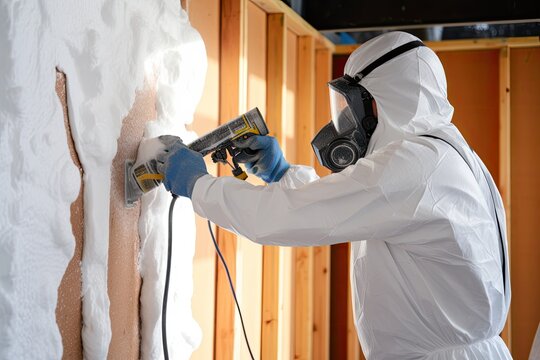
How Insulation Experts Conduct Air Leakage Diagnostics
Insulation experts use structured testing protocols and advanced diagnostic tools to locate problem areas in existing homes.
Blower Door Testing: The Industry Standard
A blower door test measures how much air escapes from a home under controlled pressure. Technicians mount a powerful fan in an exterior door to depressurize the house.
- Pressure differential forces air through leaks
- Digital gauges calculate air changes per hour (ACH)
- Results show airtightness compared to code or performance targets
This process allows insulation advisors to quantify the severity of leakage.
Infrared Thermography for Visual Confirmation
After depressurizing the home, insulation professionals use thermal imaging cameras to visualize where outdoor air is entering.
- Cold spots on interior walls highlight problem zones
- Gaps around framing, wiring, and joints become visible
- Helps verify the success of previous insulation or sealing efforts
Thermal scans are especially useful in identifying hidden leakage paths behind drywall.
Smoke Testing and Localized Airflow Checks
For detailed analysis, foam insulation consultants may use smoke pens, incense sticks, or airflow meters at suspected leak sites.
- Tracks how quickly air moves around outlets, vents, and window trim
- Confirms whether sealing measures are effective
- Useful for evaluating specific rooms or building levels independently
These techniques support decision-making before applying foam insulation products.
Critical Zones Where Air Leaks Occur in Raleigh Homes
Not all parts of a structure are equally vulnerable to leakage. Experienced spray foam teams focus on high-priority locations.
Attics and Roof Decks
Unconditioned attic spaces often contain open framing, gaps around chimneys, and unsealed utility penetrations.
- Open soffits and recessed lighting fixtures contribute to airflow
- Ventilation duct joints often leak air
- Spray foam can seal attic floors and underside of roof sheathing
Rim Joists and Crawl Spaces
Rim joists—the perimeter framing above foundations—are major leak points. These areas expand and contract seasonally.
- Unsealed sill plates allow outdoor air infiltration
- Crawl spaces with vented access contribute to cold floors
- Closed-cell foam is often used for moisture and air control
Wall Penetrations and Framing Gaps
Exterior walls often have hidden voids or unsealed junctions from construction or retrofitting.
- Electrical boxes and plumbing cutouts are common sources
- Framing intersections like top plates and corners leak conditioned air
- Local spray foam experts use injection or cavity access methods to treat these areas
Comparison Table: Diagnostic Tools Used by Insulation Experts
|
Tool or Technique |
Purpose |
Ideal Use Scenario |
|---|---|---|
|
Blower Door Test |
Measures total air leakage rate |
Whole-house airtightness assessment |
|
Infrared Camera |
Visualizes temperature differences |
Identifying exact leak locations |
|
Smoke Pens |
Tracks directional air movement |
Confirming leak presence in small zones |
|
Digital Manometers |
Measures pressure differentials |
Monitoring building envelope balance |
|
Moisture Sensors |
Detects leak-related humidity |
Evaluating leaks near ducts and sill plates |
How Raleigh Foam Insulation Specialists Respond to Air Leaks
Once air leakage patterns are mapped, insulation experts design targeted spray foam solutions tailored to each building.
Material Selection Based on Building Needs
Spray foam products vary by density, expansion rate, and moisture resistance.
- Closed-cell foam is used in rim joists, crawl spaces, and basements
- Open-cell foam works well in walls and ceilings for sound control
- Hybrid approaches use both types across different assemblies
The right material depends on access, humidity, and insulation goals.
Application Techniques for Effective Sealing
Foam insulation consultants consider structural access and material behavior during application.
- Attic floor foaming for continuous air and thermal control
- Rim joist foaming with vapor barrier properties
- Wall cavity injection using small access holes behind drywall
Sealing and insulating simultaneously provides long-term indoor performance benefits.

Common Questions About Air Leak Evaluation
How long does a blower door test take in an existing home? Most tests take 1–2 hours including setup and analysis. Larger or multi-zone properties may require more time depending on access and complexity.
Can spray foam alone stop all air leaks? Spray foam seals most common leak points, but some structural gaps may require additional sealing methods or air barriers depending on layout and framing.
Is infrared imaging accurate for leak detection? Yes. Thermal imaging shows clear contrasts between conditioned and unconditioned zones. It works best when temperature differences between indoors and outdoors are significant.
Do all older homes need an air leak evaluation? Not all, but most homes built before recent code updates benefit from an assessment. The evaluation can identify energy-saving opportunities without requiring major renovation.
What’s the difference between open-cell and closed-cell foam for air sealing? Closed-cell foam is denser and adds structural support while resisting moisture. Open-cell is lighter and expands more, offering better sound absorption. Both seal air effectively when applied correctly.
Ready to Achieve Energy-Efficient Indoor Performance?
Air leak detection is the foundation of any successful insulation upgrade. Sealing airflow gaps with spray foam improves indoor comfort, lowers HVAC loads, and helps meet energy efficiency goals in Raleigh homes.
Raleigh Excel Spray Foam Insulation provides expert diagnostic services and tailored foam applications for properties of all sizes. Certified teams apply tested practices to solve insulation and airflow issues at the source.
Call (919) 301-9435 or email [email protected] to request a diagnostic appointment.
FAQs
Is it necessary to test for air leaks before adding insulation? Yes. Identifying leak points ensures that insulation upgrades are effective. Insulating without sealing can trap moisture or allow continued energy loss.
Can spray foam be applied during winter in Raleigh? Yes. Spray foam can be applied in cold weather using temperature-controlled rigs. Closed-cell foam is often preferred for winter installations due to its fast cure time.
Are air leak evaluations invasive to the home? No. Evaluations rely on non-destructive methods like blower door tests and thermal imaging. Minimal drilling is only needed if cavity access is required for treatment.
How do insulation experts determine which foam to use? Selection is based on area conditions, building materials, access, and whether soundproofing or moisture resistance is a priority.
Does air sealing improve indoor air quality? Yes. Sealing prevents outdoor pollutants, moisture, and allergens from entering the home, creating a more controlled and healthier indoor environment.
Reviewer: With nearly a decade in the spray foam insulation field, William Harris reviewed this post and provided guidance that reflects both technical understanding and real-world marketing experience.








Post Comment