How Does Your Home’s Insulation System Affect Your Carbon Footprint in Provo, UT?
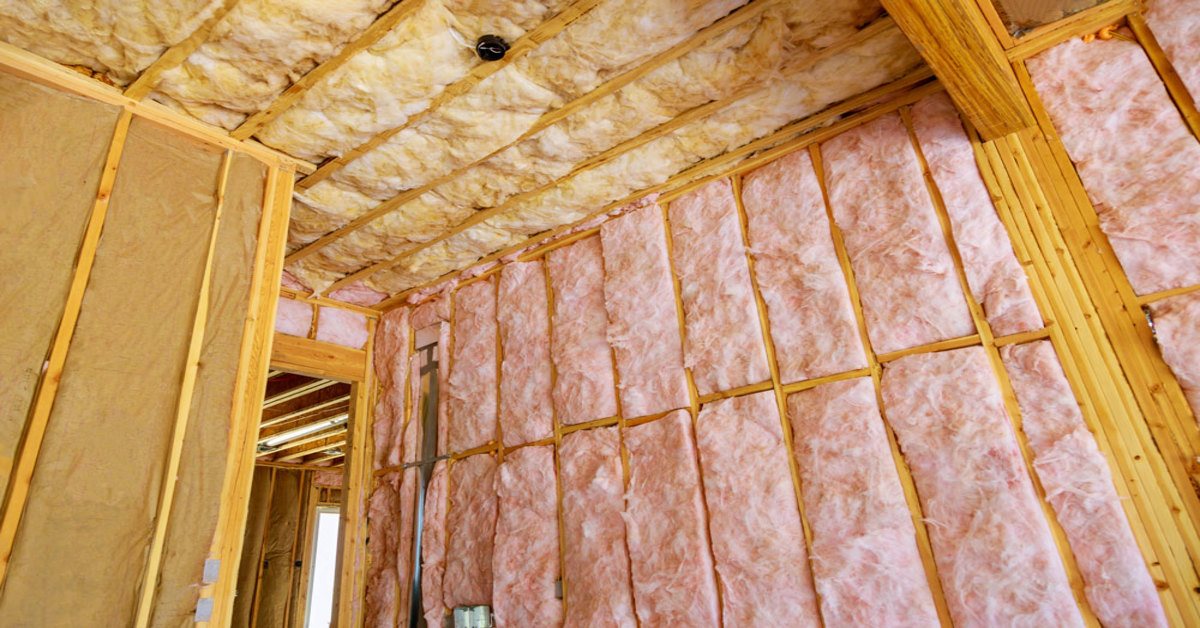
A home’s insulation system has a direct and significant effect on its carbon footprint, especially in a place with the distinct seasons of Provo, UT. The connection is simple: poor or insufficient insulation forces a home’s heating and cooling systems to run longer and harder to maintain a comfortable temperature. Since most of Provo’s energy for heating and electricity comes from burning fossil fuels, this increased energy consumption translates directly into higher carbon dioxide emissions. A well-insulated house, on the other hand, requires far less energy, leading to a smaller carbon footprint and lower utility bills.
Exploring this relationship in detail reveals how different insulation materials perform in Provo’s climate and what homeowners can do to reduce their environmental impact. The information is based on established building science and insights from spray foam insulation professionals Provo, UT who understand the specific challenges of the region. The goal is to provide a clear path for homeowners wanting to create a more comfortable, energy-efficient, and environmentally friendly living space.
The Provo Climate and Your Energy Bill
Provo’s location along the Wasatch Front means residents experience the full range of a four-season climate. Summers are hot and dry, while winters are cold and snowy. This puts a constant demand on a home’s HVAC system. In the winter, heat naturally wants to escape to the colder outdoors. In the summer, the intense sun and high temperatures try to force their way in. The home’s insulation acts as the primary barrier against this constant heat transfer.
When that barrier is weak, the consequences are clear. A poorly insulated attic in the summer can reach temperatures well over 140°F, radiating heat down into the living spaces and making the air conditioner work overtime. In the winter, heat escapes through the same attic, as well as through walls and floors, forcing the furnace to burn more natural gas. According to the U.S. Department of Energy, heating and cooling account for nearly half of the energy use in a typical American home. By reducing that energy demand, you also reduce the associated carbon emissions.
The Mechanics of an Effective Insulation System
To understand how insulation cuts carbon emissions, it’s helpful to know how it works. Insulation’s primary job is to slow down the movement of heat. An effective insulation system does this in two main ways: by resisting thermal transfer and by stopping air leakage.
Resisting Heat Flow (R-Value)
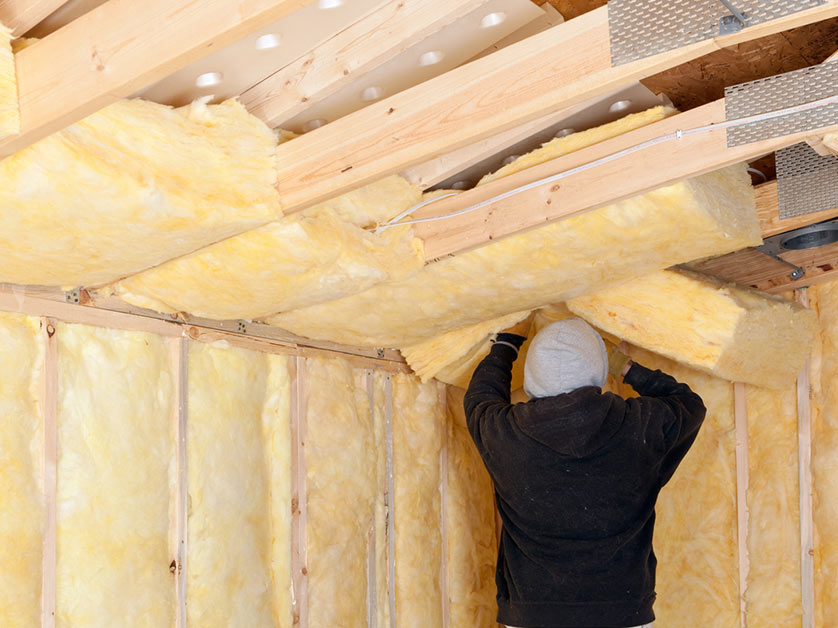
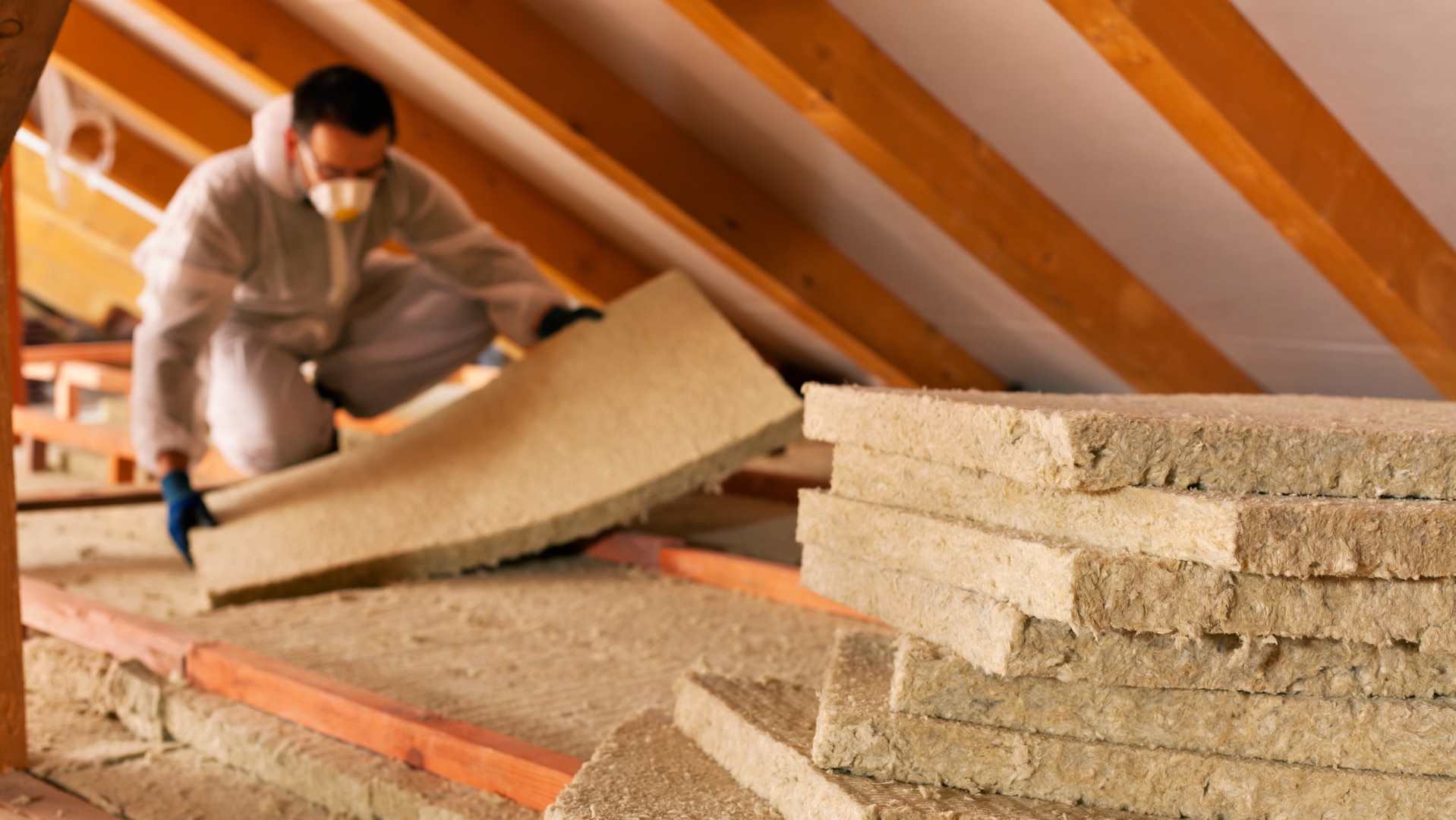
Every insulation material has an R-value, which measures its resistance to heat flow. The higher the R-value, the better the material insulates. Old, compressed, or insufficient insulation has a low R-value, allowing heat to pass through it easily. This is like wearing a thin jacket on a cold winter day. Modern insulation, installed at the correct thickness, provides a high R-value, effectively keeping indoor heat in during the winter and outdoor heat out during the summer.
Sealing Air Leaks
Just as important as R-value is air sealing. Tiny cracks and gaps around windows, pipes, and in the building frame can lead to a tremendous amount of energy loss through air leakage. This is like leaving a window open all year round. Uncontrolled air leakage can force an HVAC system to constantly heat or cool new, unconditioned air from the outside. Some studies show that air leakage can account for up to 40% of a home’s energy loss.
Modern insulation solutions like spray foam excel here because they create both an R-value barrier and an airtight seal in a single application.
A Look at Different Insulation Materials
Homeowners have several choices when it comes to insulation, and each has a different performance profile and environmental impact.
|
Insulation Type |
Typical R-Value (per inch) |
Air Sealing Ability |
Common Environmental Notes |
|---|---|---|---|
|
Fiberglass Batts |
R-3.1 to R-4.3 |
Poor |
Can be made with recycled glass, but air permeable and susceptible to moisture. |
|
Cellulose |
R-3.2 to R-3.8 |
Fair |
Made from recycled paper (low embodied carbon), but can settle and lose R-value over time. |
|
Open-Cell Spray Foam |
R-3.5 to R-3.8 |
Excellent |
Provides a great air seal, but is vapor permeable and offers no structural support. |
|
Closed-Cell Spray Foam |
R-6.0 to R-7.0 |
Excellent |
Highest R-value and an air/vapor barrier. Its long-term energy savings often offset its chemical production footprint. |
Bonus Tip: When considering the environmental impact of insulation, look beyond just the manufacturing process. A material that performs for 50 years without degrading will prevent far more carbon emissions over its lifetime than a material that needs to be replaced or supplemented after 15 years.
The Impact of Air Sealing on a Low-Carbon Home
Spray foam insulation has become a popular choice for energy-conscious homeowners because it addresses both heat transfer and air leakage so effectively. When applied, it expands to fill every crack and crevice, creating a continuous, airtight barrier.
This airtightness is a game-changer for reducing a home’s carbon footprint. By stopping drafts, spray foam dramatically lowers the amount of energy needed to heat and cool the house. This means HVAC systems run less often and for shorter periods. In many cases, homes insulated with spray foam can even be designed with smaller, more efficient HVAC units from the start, saving both money and energy for the life of the building.
The durability of spray foam also contributes to its positive environmental impact. Unlike other materials that can sag, settle, or degrade from moisture, closed-cell spray foam is a rigid, waterproof plastic that maintains its R-value and air-sealing properties indefinitely. This long-term performance means the energy savings, and thus the carbon reductions, are locked in for decades.
Things to Consider Before Making a Decision
Upgrading insulation is a significant home improvement project. Before moving forward, homeowners should think about a few key points.
- Conduct an Energy Audit: The first step should be a professional energy audit. An auditor can use tools like a blower door test and an infrared camera to pinpoint exactly where a home is losing the most energy. This ensures that any investment in insulation is targeted to the areas that will provide the biggest return.
- Plan for Ventilation: Creating an airtight home with spray foam or other methods means you also have to control the home’s ventilation. Tightly sealed homes need a mechanical ventilation system, like an energy recovery ventilator (ERV), to bring in fresh air and exhaust stale air, ensuring a healthy indoor environment.
- Choose the Right Installer: The performance of spray foam insulation is entirely dependent on the quality of the installation. It’s a chemical product that is manufactured on-site, so the technicians must be well-trained and experienced. Homeowners should always vet potential contractors carefully.
- Evaluate the Lifecycle: Think about the insulation as a long-term part of the house. While some materials may have a lower upfront cost, if they underperform or need to be replaced, their true cost to both the wallet and the environment is much higher.
Bonus Tip: Ask potential installers about the blowing agents used in their spray foam products. Modern formulas are made with blowing agents that have a very low global warming potential (GWP), making them a much more environmentally friendly choice than older formulations.
Questions About Insulation and Carbon Footprint
How can I be sure my insulation is the problem?
Common signs of poor insulation include high energy bills, rooms that are difficult to keep warm or cool, ice dams on the roof in winter, and drafts. An energy audit is the best way to get a definitive answer.
Is it better to add more insulation on top of my old stuff?
Sometimes, but not always. If the existing insulation is wet, moldy, or compacted, it should be removed. If it’s in good condition, adding more on top (especially in an attic) can be a cost-effective way to boost R-value.
Will upgrading my insulation increase my home’s resale value?
Yes, energy efficiency is an increasingly important feature for homebuyers. A home with low documented energy bills and a comfortable living environment is more attractive on the market.
What is the payback period for new insulation?
The payback period varies depending on the cost of the project, local energy prices, and the condition of the old insulation. However, many homeowners see savings of 20% or more on their heating and cooling costs, allowing the investment to pay for itself over time.
Does the federal government offer tax credits for insulation?
Yes, federal tax credits for energy-efficient home improvements, including insulation, are often available. Homeowners should check the latest government programs to see what credits they may be eligible for.
Making a Long-Term Environmental Impact
A home’s insulation system is one of the most powerful tools a homeowner has for reducing their personal carbon footprint. In a climate like Provo’s, the decision to invest in a high-performance insulation system is a choice that pays dividends for years. It creates a more comfortable and affordable home while making a meaningful contribution to a healthier environment. By thinking about the home as a complete system, homeowners can make smart choices that align their financial goals with their environmental values.
How to Get a Professional Insulation Plan
The best way to understand the specific needs of a home is to have it professionally evaluated. An experienced insulation contractor can perform an assessment and recommend the most effective solutions for improving energy efficiency and reducing a home’s carbon footprint. For homeowners in the Provo area, the team at Nevada Urethane has extensive experience with the climate challenges common to the Intermountain West. They offer detailed consultations and can design an insulation plan tailored to any home. They can be reached by phone at (775) 500-0024 or by email at [email protected].
Reviewer: Maria Lopez offered detailed feedback after reviewing this post. Her 10 years of experience in spray foam work helped guide the tone and suggestions toward realistic strategies.







Post Comment