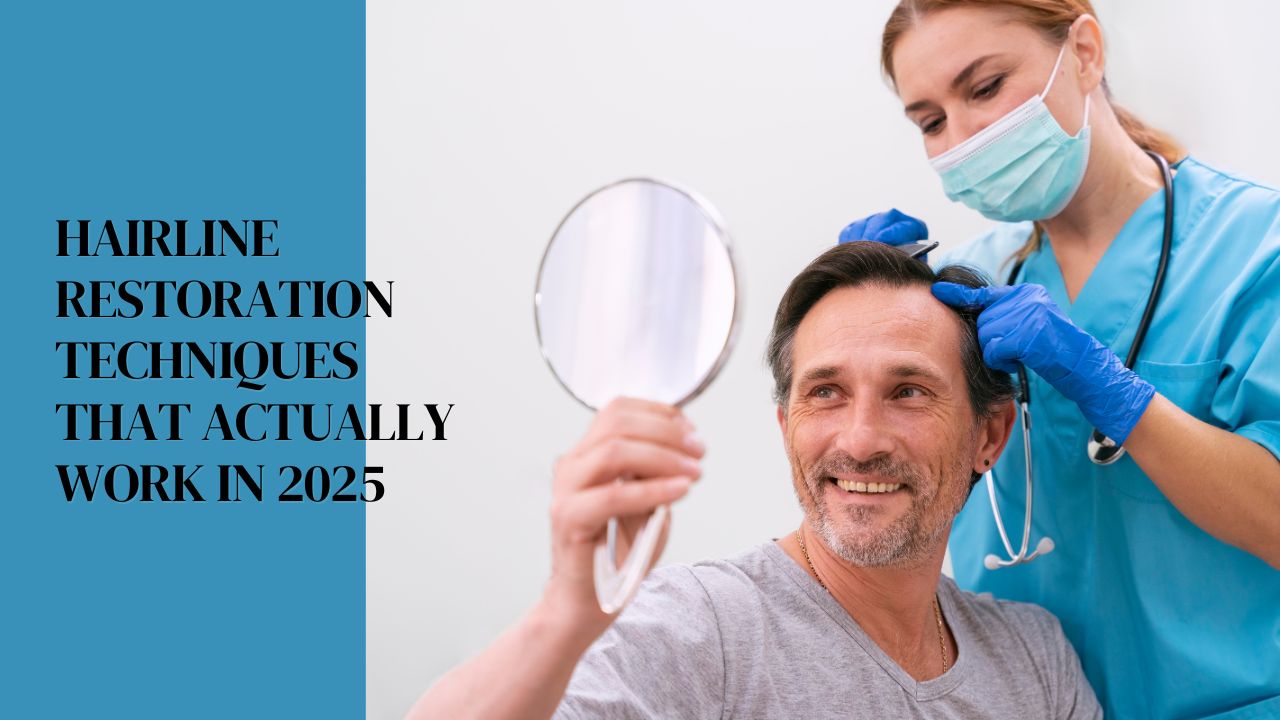
Hairline Restoration Techniques That Actually Work in 2025
Hair loss can be a stressful and emotional experience, affecting both men and women at various stages of life. Whether it’s due to genetics, ageing, stress, or other factors, a receding or thinning hairline often impacts self-confidence. The good news is that hairline restoration has advanced significantly in 2025, offering solutions that are not only effective but also look completely natural. Today, two surgical techniques—Follicular Unit Extraction (FUE) and Follicular Unit Transplantation (FUT)—are widely recognised for their ability to restore hairlines in a safe and precise manner. Understanding these methods, their benefits, and how hairline surgery work can help you make an informed decision and achieve lasting results, giving you the confidence to face the world with a renewed look.
What Is Hairline Restoration?
Hairline restoration is a specialised procedure designed to rebuild or enhance the hairline, creating a natural appearance that complements the face. Unlike temporary solutions such as wigs or topical treatments, surgical restoration works by transplanting your own hair follicles to areas of thinning or receding hair. The goal is to achieve a hairline that matches your natural growth pattern, density, and direction of hair. In 2025, modern techniques focus not only on coverage but also on the aesthetic design of the hairline. This ensures that results look authentic and blend seamlessly with surrounding hair, making hairline restoration a long-term solution rather than a temporary fix.
FUE: Follicular Unit Extraction
Follicular Unit Extraction (FUE) is one of the most popular techniques for hairline restoration today, due to its minimally invasive approach and natural-looking outcomes. In this procedure, individual hair follicles are carefully extracted from a donor area—usually the back or sides of the scalp—and transplanted to the thinning or balding regions.
Some of the main advantages of FUE include:
- Minimal scarring: Small dot-like scars are barely noticeable and heal quickly.
- Quick recovery: Most patients can return to normal activities within a few days.
- Precision placement: Allows surgeons to recreate a natural hairline with meticulous attention to the direction and angle of each follicle.
- Flexibility: Ideal for small to medium-sized restorations or refining previous hairline work.
FUE is especially suitable for individuals who prefer a faster recovery and less visible scarring, making it a reliable option for subtle, gradual hairline restoration.
FUT: Follicular Unit Transplantation
Follicular Unit Transplantation (FUT) is another highly effective surgical method for hairline restoration, particularly for patients with more extensive hair loss. Unlike FUE, FUT involves removing a thin strip of scalp from the donor area, which is then carefully divided into individual follicular units before being transplanted to the thinning regions.
Key benefits of FUT include:
- High graft yield: Capable of restoring larger areas in a single session.
- Longstanding results: A proven method with decades of clinical success.
- Cost-effectiveness: Often more affordable for patients requiring a large number of grafts.
While FUT does leave a linear scar, it can usually be concealed by surrounding hair. For patients needing dense coverage or full hairline reconstruction, FUT remains an excellent option for achieving natural, long-lasting results.
Choosing the Right Hairline Restoration Technique
Deciding between FUE and FUT for hairline restoration depends on several factors, including the size of the area needing treatment, hair density, budget, and recovery expectations. FUE is ideal for smaller, precise areas with minimal downtime, while FUT works best for extensive hairline reconstruction that requires a higher number of grafts. Consulting with an experienced specialist is crucial to understanding which approach aligns with your goals and lifestyle. Clinics like Beverly Hills Hair Restoration in Palm Desert offer personalised consultations to determine the most suitable technique, ensuring that each patient achieves a natural and aesthetically pleasing hairline that blends seamlessly with their existing hair.
Conclusion
Modern hairline restoration techniques, particularly FUE and FUT, have revolutionised the treatment of hair loss. Both methods enable patients to achieve a natural-looking hairline while boosting their confidence and self-esteem. FUE is ideal for individuals seeking minimal scarring and a faster recovery, while FUT is highly effective for larger areas that require more grafts. With careful planning, precision, and guidance from skilled specialists, it is now possible to achieve results that look completely natural and long-lasting. As techniques continue to advance in 2025, taking the step toward hairline restoration can help you reclaim not just your hair but also your confidence, making it a truly life-changing solution.





Post Comment