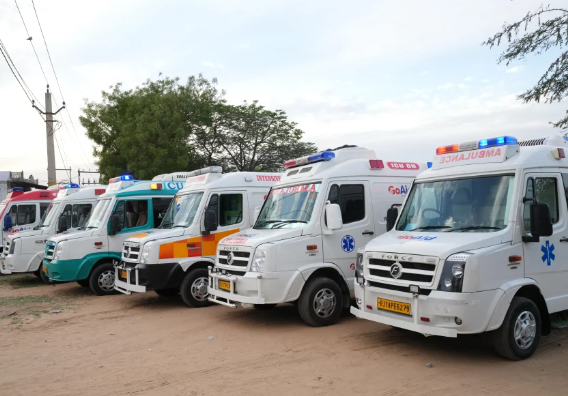
Future of Ambulance Services in Mumbai: Trends to Watch
Ambulance services in Mumbai are undergoing a dynamic evolution. With rapid urbanization, congested roads, increasing demands for emergency care and greater expectations from patients and families, the future of ambulance services is shaping up to be more sophisticated, patient-centric and tech-driven. In this blog we’ll explore the major trends that will define the Goaid ambulance ecosystem in Mumbai over the coming years, drawing from current service models, emerging innovations and the unique challenges of a mega-city.
1. 24/7 Rapid Response with High Availability
In a city like Mumbai, where every minute counts, the emphasis is shifting towards ultra-fast, always-available ambulance services. Traditional models of waiting are giving way to highly responsive systems that guarantee arrival within a very short span of time.
Services are being designed to operate 24 hours a day, 7 days a week, with fleets strategically distributed across neighborhoods and access to real-time traffic data to ensure the right vehicle reaches the right place. Patients and families expect this high level of readiness, especially for critical situations such as cardiac events or severe trauma.
What this means for the future:
-
More ambulances with GPS-enabled tracking and dispatch systems.
-
Predictive routing that avoids traffic bottlenecks and selects the best path.
-
Dedicated rapid-response units for densely populated zones or high-risk sectors of the city.
-
Better staffing models, with paramedics, EMTs and support teams ready at all times.
-
Transparency for patients and families about expected arrival times and status.
2. Diverse Ambulance Types & Specialised Care In Transit
Ambulance services are no longer limited to just transportation from point A to point B. Mumbai’s rising demand for nuanced medical situations means a wide spectrum of ambulance types is gaining importance. These include:
-
Normal Ambulances / Road Ambulances: For general patient transportation and non-critical transfers.
-
Oxygen Ambulances: Vital for patients with respiratory distress or those who require supplementary oxygen on the move.
-
ICU / Ventilator Ambulances: Equipped to handle very critical care during transit with advanced life support equipment and monitoring.
-
Dead-Body Transport / Mortuary Vans & Freezer Boxes: Providing dignified transfer for deceased persons, a service that addresses a sensitive but essential need.
-
Train / Air Ambulance Transfers: For inter-city or long-distance patient relocation where time and care continuity are essential.
In the future, we can expect even more specialised units — for example stroke-ready ambulances, neonatal transport units, or high-risk maternity transfer vehicles. The goal: maintaining continuity of care even before the patient reaches the hospital.
3. Affordable, Accessible Private Ambulance Services
While government-run ambulance systems remain crucial, there’s a growing space for private ambulance services in Mumbai that combine high quality with affordability. These services emphasise:
-
Transparent pricing, often aligned with or referencing government-approved charges.
-
Accessibility across the city (from downtown to suburbs).
-
Booking convenience — via phone, mobile apps or online platforms.
-
Professionalism in staff, equipment and service levels.
Going forward, private ambulance providers will need to scale whilst maintaining affordability and creating flexible pricing models (e.g., for non-emergency transfers, for long-distance relocation, for specialised ambulances). Accessibility will especially matter in underserved pockets of the city.
4. Technology & Digital Integration
Technology is perhaps the single most transformative trend for ambulance services in Mumbai. Key components include:
-
Mobile apps & online booking: Enabling instant booking, live tracking, status updates and estimated arrival times.
-
Fleet management systems: Real-time tracking of vehicles, driver performance monitoring, optimized dispatch.
-
Telemedicine integration: Paramedics in the ambulance linking with doctors/hospitals while en-route, to start initial treatment or prepare the receiving hospital.
-
IoT & connected devices: Ambulances equipped with connected monitors, onboard diagnostics, and live data feeds to receiving facilities.
-
Data analytics & AI: Predictive modeling for demand-hotspots in Mumbai (e.g., rush-hour areas, accident-prone intersections), and allocation of resources accordingly.
-
Communication systems: Seamless handover of patient data from ambulance to hospital, reducing delays in care on arrival.
As these technologies mature, we will see a shift from “transport service” to “mobile care hub” — where the ambulance begins the process of treatment, coordination and decision-making.
5. Seamless Integration with Hospitals & Healthcare Network
For an ambulance service to deliver optimal results, its integration with hospitals, specialty units and the wider healthcare ecosystem is critical. In Mumbai’s context:
-
Ambulances need pre-alerts to hospitals so that emergency departments, ICU beds and specialist teams are ready on patient arrival.
-
Network coordination between ambulance, hospital and referring physician allows smoother transfers and better patient outcomes.
-
Standardisation of protocols (triage, pre-hospital care, documentation) across ambulances and hospitals ensures continuity of care.
-
Transfer services (from smaller hospitals to tertiary centres within or outside Mumbai) become smoother and better coordinated.
Looking ahead, the future will see ecosystem public-private partnerships, shared data-platforms and tighter linkages between ambulance fleets and hospital command centres. This ensures patients get timely access to the right care level without wasted time or mis-routing.
6. Focus on Quality, Safety & Training
As ambulance services expand and diversify, maintaining high standards of care, safety protocols and staff training becomes non-negotiable. Some future directions:
-
Certified paramedics and EMTs with continuous education and specialised training (e.g., critical care in transit).
-
Rigorous vehicle maintenance, equipment checks and readiness audits.
-
Standard operating procedures (SOPs) for various scenarios (mass-casualty, cardiac arrest, remote transfers).
-
Quality metrics and transparent reporting — response times, patient outcomes, service feedback.
-
Safety features: driver training, crash-avoidance systems, and adapting to Mumbai’s traffic and urban challenges.
The trend will increasingly shift away from just being “there quickly” to “there with competence and care”. Families expect not only speed, but assurance that the ambulance service is proficient and reliable.
7. Geographic Coverage & Last-Mile Reach
In a sprawling metropolis such as Mumbai, covering the full geographic area — including suburbs, high-density zones, narrow lanes and growth regions — is vital. Key trends include:
-
More ambulances placed strategically across satellite suburbs and underserved localities to reduce response times.
-
Use of smaller, agile vehicles (or alternate modes) for congested zones or narrow alleys where a large ambulance might struggle.
-
Enhanced mapping and data tools that identify underserved zones, peak-demand pockets and resource gaps.
-
Partnerships with local authorities to enable better access (for example dedicated lanes or priority at signals during emergencies).
Thus, future ambulance services will focus on the “last mile” — the ability to reach every corner of the city promptly and safely. Ensuring equity of access across socio-economic zones will become a key area of differentiation.
8. Patient & Family Experience
Ambulance services are inherently stressful for patients and families. The future trend is to elevate the experience factor — not just clinical care but compassion, communication and support. Some aspects:
-
Clear communication during booking: arrival estimates, what to expect, cost transparency.
-
On-route updates for family members: tracking progress, live location, patient status.
-
Ambulance personnel trained in patient interaction, empathy and calming communication.
-
After-care coordination: making sure that the handover to the hospital is smooth, and the family is informed about next steps.
-
Visibility of credentials, equipment, certifications — so families have confidence in the service they’re calling.
By viewing ambulance transport not just as a ride but as an experience, future services will build trust and preferability among Mumbai’s population.
9. Regulatory & Collaborative Frameworks
To keep pace with growth and quality demands, ambulance services will increasingly interact with regulatory frameworks, government policy and collaborative models. This includes:
-
Compliance with state and national regulations regarding ambulance equipment, staffing, licensing and pricing.
-
Collaboration with public emergency services (e.g., emergency number systems, municipal ambulance fleets) for sharing resources and referral networks.
-
Standardised pricing and transparent billing to prevent over-charging and ensure fair access.
-
Public-private partnerships that enable private ambulance services to complement government systems, especially during mass-emergency scenarios or large-scale disasters.
-
Accreditation and certifications becoming routine as the sector matures.
For Mumbai, this means ambulance providers that align with best practices, transparency and compliance will emerge as leaders in the future.
10. Sustainability & Cost-Effectiveness
Finally, as services scale, the sustainability angle becomes important — both financially and operationally. Emerging trends:
-
Optimising fleet utilisation: ensuring ambulances are deployed efficiently and downtime is minimised.
-
Variable pricing models (e.g., for non-emergency transfers, long-distance transport) to manage cost and demand.
-
Use of renewable energy or hybrid vehicles (where feasible) to reduce running costs and carbon footprint.
-
Preventive maintenance and data-driven scheduling to reduce breakdowns and service delays.
-
Leveraging economies of scale for equipment procurement, training and operations.
For an ambulance service to be viable in Mumbai’s competitive and resource-licit environment, being cost-smart and sustainable will be a key differentiator.
Conclusion: A Forward-Looking View
In summary, the future of ambulance services in Mumbai points toward a model that is fast, specialised, tech-enabled, integrated with hospitals, patient-centric, and spread out across the full geography of the city. Private players and public systems will need to converge, leverage innovation and emphasise both technical excellence and human experience.
For families and patients in Mumbai, this evolution means increased confidence that when an emergency happens — regardless of time or place — there is a responsive ambulance nearby, with the right care en-route, the right communication, and the right outcome.
Remember: emergencies don’t wait. But with the trends highlighted above advancing steadily, the ambulance sector in Mumbai is becoming better prepared than ever to meet those moments when every second matters.
Want to know more about Goaid Service, then click the following link: Goaid Service in Mumbai








Post Comment