Free Voice Generator: A Deep Dive Into Modern Synthetic Voice Technology
The rise of artificial intelligence has reshaped the landscape of digital content creation, and one of its most transformative tools is the free voice generator. Once limited to robotic-sounding speech, voice synthesis has evolved into a powerful, natural, and highly flexible solution for countless creative and professional applications.
A free voice generator enables anyone—from students and small creators to educators and businesses—to generate clear, human-like voiceovers without recording equipment or voice acting experience. This article explores how these tools work, why they matter, and how you can use them effectively.
What Exactly Is a Free Voice Generator?
A free voice generator is a tool powered by artificial intelligence that converts written text into spoken audio. Using deep learning and neural speech synthesis, these systems analyze the structure and meaning of text before producing lifelike speech in various tones, speeds, and accents.
What once required studios, microphones, and professional voice talent can now be created through a simple browser-based tool—often at no cost.
How a Free Voice Generator Works Behind the Scenes
Although free voice generators appear simple to the user, the underlying technology is complex. The process typically includes three major components:
Text Interpretation
The tool breaks down the input text into sentences, phrases, punctuation patterns, and contextual cues. This ensures natural pacing and correct pronunciation.
AI Speech Modeling
Modern free voice generators rely on neural networks trained on thousands of hours of real human speech. These models learn tone, pitch, rhythm, pauses, and emotional patterns.
Audio Rendering
The processed text is converted into an audio waveform. Users can then download it or integrate it into their projects.
Many free tools also allow adjustments such as speed, emphasis, accent, and voice gender—making synthetic voices more customizable than ever.
Why Free Voice Generators Are Becoming Essential
The rapid growth of digital media has made voice content more valuable than ever. Free voice generators meet this demand in several key ways:
They Reduce Production Barriers
Traditional voice recording requires a quiet space, equipment, and editing skills. Free voice generators eliminate the need for all of these.
They Save Time
Recording, re-recording, editing, and mastering audio can take hours. AI delivers clean audio instantly.
They Support Multilingual Communication
Many generators offer dozens of languages, accents, and global voice styles.
They Empower Small Creators
Individuals without budgets can produce professional-sounding audio for free.
They Offer Consistency
A synthetic voice always sounds the same, ensuring uniform narration across long-term projects.
Popular Uses of Free Voice Generators Today
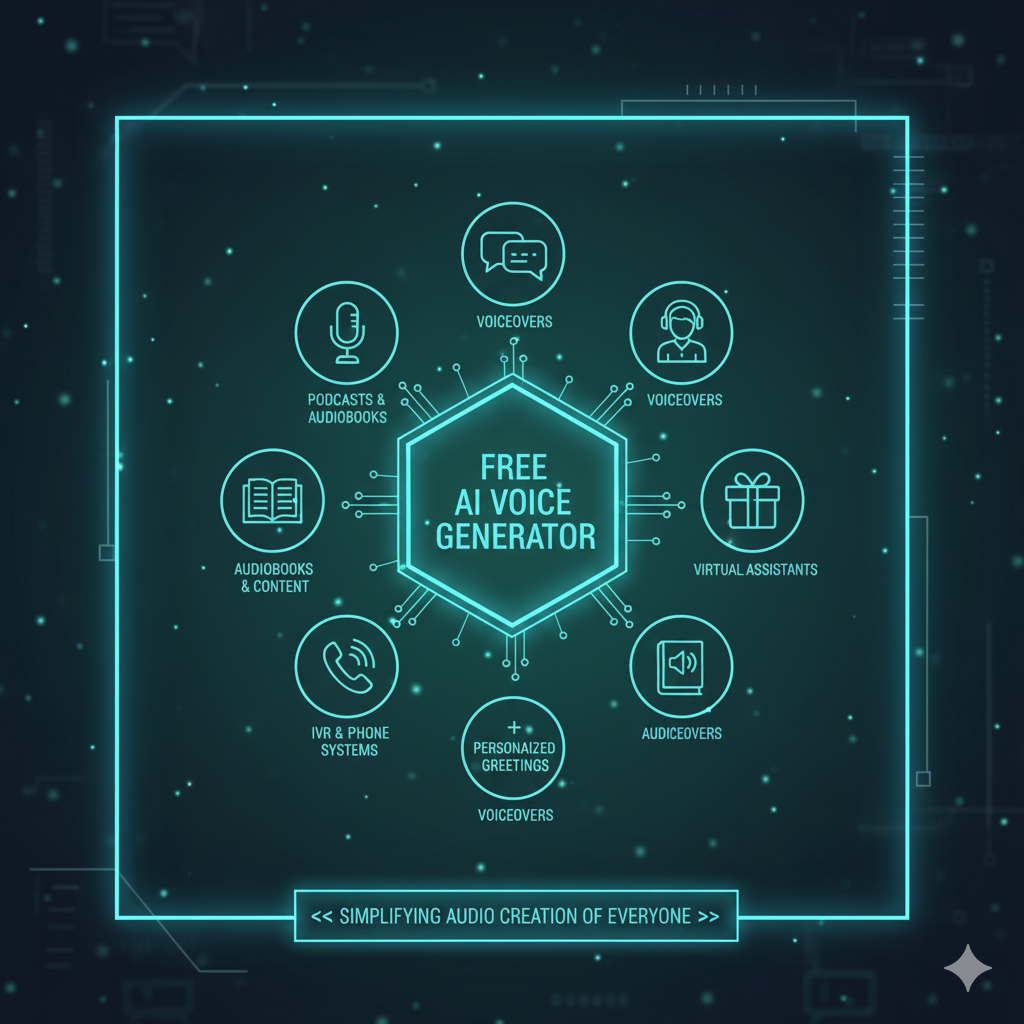
Free voice generators have practical applications across a wide range of industries and personal projects:
Digital Content and Social Media
Creators use AI voices for tutorials, reactions, storytelling, animations, and short-form content on platforms like YouTube, TikTok, and Instagram.
Education and E-Learning
Teachers and students generate narrations for lessons, training videos, and presentations.
Business Communication
Voiceovers for product demos, corporate videos, and explainer content are often created with AI.
Game Development
Developers use AI voices for characters, dialogue testing, and prototyping.
Audiobooks and Narration
Writers convert stories into audio versions without hiring narrators.
Accessibility
A free voice generator can help individuals with reading difficulties, vision impairments, or language barriers by turning text into speech.
Benefits of Using a Free Voice Generator
Choosing a free voice generator offers several significant advantages:
Multiple Voice Styles
Most tools offer different tones: conversational, professional, calm, energetic, robotic, and more.
Easy Revisions
If you change the script, you can regenerate the audio instantly—no need to re-record.
Noise-Free Output
AI voices don’t suffer from background noise, microphone pops, or inconsistent audio levels.
Fast Learning Curve
Users don’t need technical audio skills to create professional-sounding results.
Scalability
A free voice generator makes it easy to produce large amounts of narration quickly.
Limitations to Be Aware Of
As with any free tool, there are tradeoffs:
Limited Daily Usage
Some platforms restrict character limits or the number of generations per day.
Fewer Voice Options
Premium tools usually offer more natural voices, while free versions may have a smaller selection.
Licensing Restrictions
Some free tools do not permit commercial use; users must read the terms carefully.
Occasional Robotic Delivery
Although much improved, certain phrases or emotional lines may still sound slightly artificial.
Recognizing these limitations can help you select the right generator for your needs.
Tips for Creating Natural-Sounding AI Voiceovers
To maximize quality, consider the following techniques:
Write for the Ear, Not the Eye
Use simple sentences and straightforward phrasing. Spoken language differs from written language.
Use Punctuation Wisely
Commas, periods, and paragraph breaks help the generator create natural pauses and rhythm.
Adjust Speaking Speed
Slightly slower speeds often sound more realistic and easier to follow.
Try Multiple Voices
Different voices perform better depending on the script—some excel at narration, others at dialogue.
Listen and Revise
Treat the first audio output as a draft. Listen carefully and adjust your text until it flows properly.
These small adjustments significantly improve the quality of generated speech.
The Growing Impact of Free Voice Generators
AI voice technology continues to evolve rapidly, and free voice generators are becoming more capable each year. Future developments may include:
-
More expressive emotional tones
-
Realistic character voices
-
Personalized AI voices based on user input
-
Real-time voice translation
-
Ultra-natural speech pacing and breathing
-
Adaptive voice style changes mid-sentence
As the technology advances, synthetic voices will likely become a standard tool across media, education, business, and entertainment.
FAQ: Free Voice Generator
What can I use a free voice generator for?
You can use it for videos, audiobooks, learning content, presentations, storytelling, and accessibility purposes.
Do free voice generators sound natural?
Many modern ones sound surprisingly realistic, though emotional dialogue may vary in quality depending on the tool.
Can I use the audio commercially?
Some free tools allow it, others don’t. Always check the terms before using the output in paid or public projects.
How many languages do free voice generators support?
Most offer several languages and accents, but the selection varies by platform.
Do I need special software to use a free voice generator?
No. Most tools work directly in a web browser, with no installation required.








Post Comment