Can Residential Spray Foam Insulation Lower Humidity Indoors
Yes, residential spray foam insulation can significantly lower indoor humidity, but it does so indirectly. Its effectiveness comes from its ability to create a near-perfect air seal and, in the case of closed-cell foam, a highly effective vapor barrier. By stopping humid, moisture-laden air from infiltrating the home from the outside, spray foam reduces the total amount of moisture your air conditioning system has to deal with. This allows your HVAC system to manage the remaining indoor humidity much more efficiently, leading to a drier, more comfortable living environment.
It’s not the foam itself that absorbs moisture from the air, but rather its ability to control the building envelope that makes the difference. This article breaks down the building science behind how spray foam helps control indoor humidity and what homeowners should know before considering it as a solution for that sticky, damp feeling.
The Main Strategy: Stopping Humid Air at the Source
The single biggest contributor to high indoor humidity in most homes is air leakage. Humid outdoor air carries a lot of water vapor, and it will find its way inside through thousands of tiny cracks and gaps in your home’s walls, foundation, and attic. Traditional insulation like fiberglass or cellulose does little to stop this air movement.
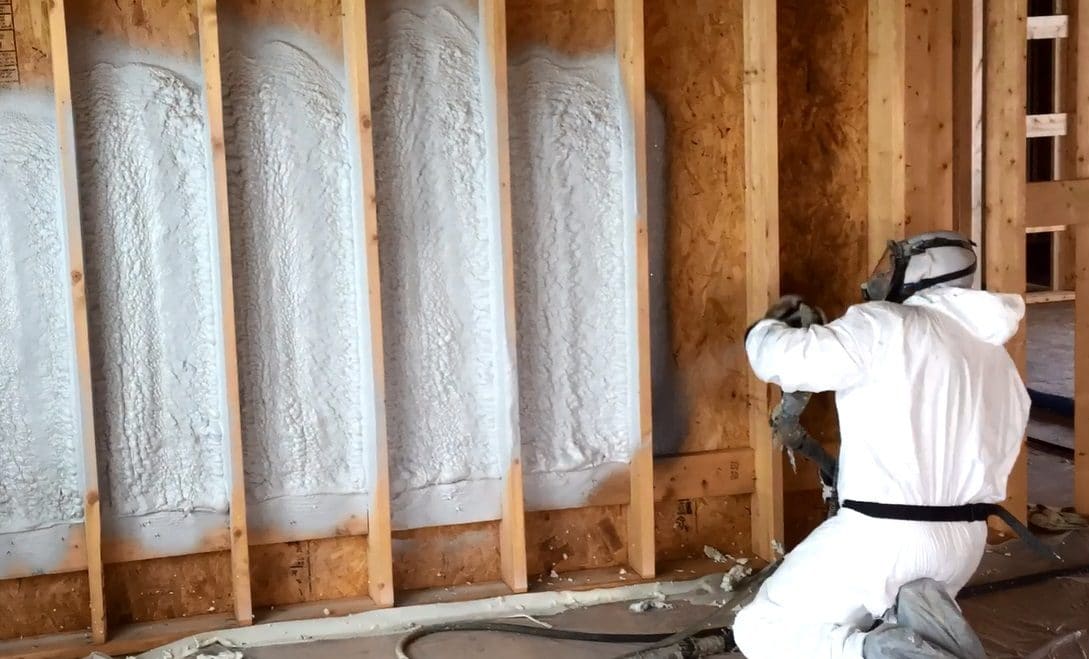
This is where spray foam insulation has a major advantage. It’s applied as a liquid that expands to fill every opening, no matter how small or irregular, before curing into a solid, airtight barrier. This process, known as air sealing, effectively stops the uncontrolled flow of humid air into the home. By blocking this primary pathway for moisture entry, spray foam drastically reduces the humidity load on the house. The ideal indoor relative humidity is between 30% and 50%; air leakage from a humid exterior can easily push those levels much higher.
The Secondary Defense: Acting as a Vapor Barrier
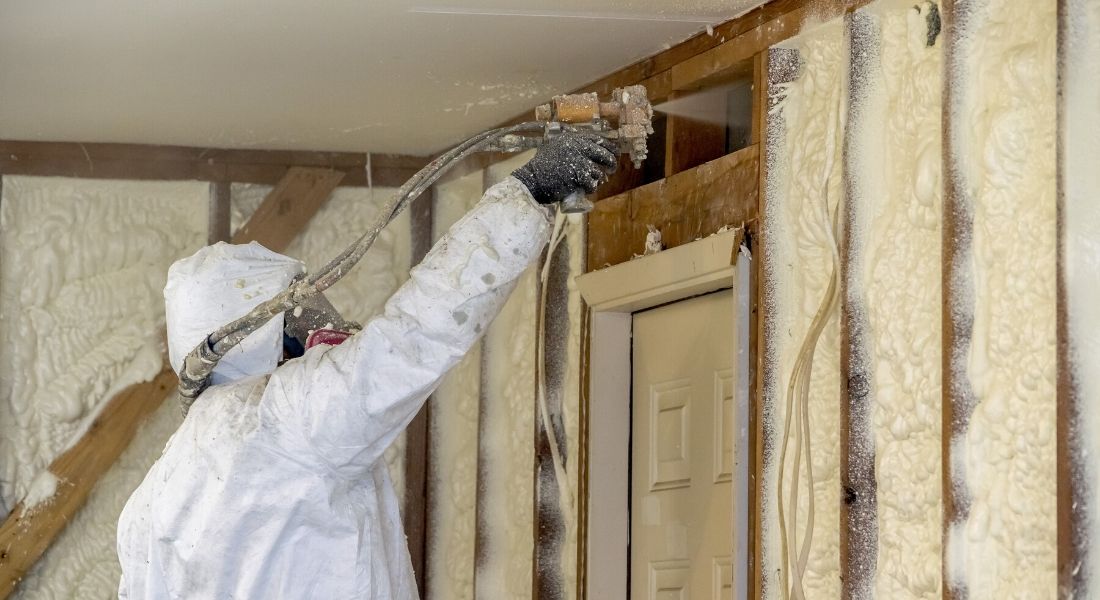
Beyond stopping air movement, closed-cell spray foam also acts as a vapor barrier. This is a critical function for humidity control. Water vapor can move directly through many building materials in a process called vapor diffusion. This is common in basements or crawl spaces where moisture from the damp ground can pass right through concrete walls.
Closed-cell spray foam has a very low “perm” rating, which means water vapor cannot easily pass through it. When applied to the interior of basement walls or the underside of a floor above a crawl space, it creates a barrier that stops this diffusion. This prevents ground moisture from entering the home’s living space, a common source of musty smells and high humidity. Open-cell foam, on the other hand, is vapor-permeable and does not provide this benefit.
How Foam Types Handle Moisture
|
Feature |
Closed-Cell Spray Foam |
Open-Cell Spray Foam |
|---|---|---|
|
Air Barrier |
Yes (Excellent) |
Yes (Good) |
|
Vapor Barrier |
Yes (Excellent) |
No (Vapor Permeable) |
|
Water Resistance |
Impermeable to liquid water |
Will absorb and hold water |
|
Best Use for Humidity |
Basements, crawl spaces, exterior walls |
Interior walls (for sound), unvented attics in dry climates |
Bonus Tip: Before insulating a basement or crawl space, it’s essential to fix any active water leaks. Spray foam will block moisture, but it cannot stop a leak. Trapping liquid water behind the foam can lead to serious hidden damage.
Letting Your HVAC System Work Smarter Not Harder
Your air conditioner is your home’s most powerful dehumidifier. As it cools the air, it pulls out moisture, which then drains away. However, when your home is constantly battling air leaks, the A/C system often can’t keep up. It runs in short, frequent cycles just to fight the incoming hot air, and these short cycles are not long enough to effectively remove humidity.
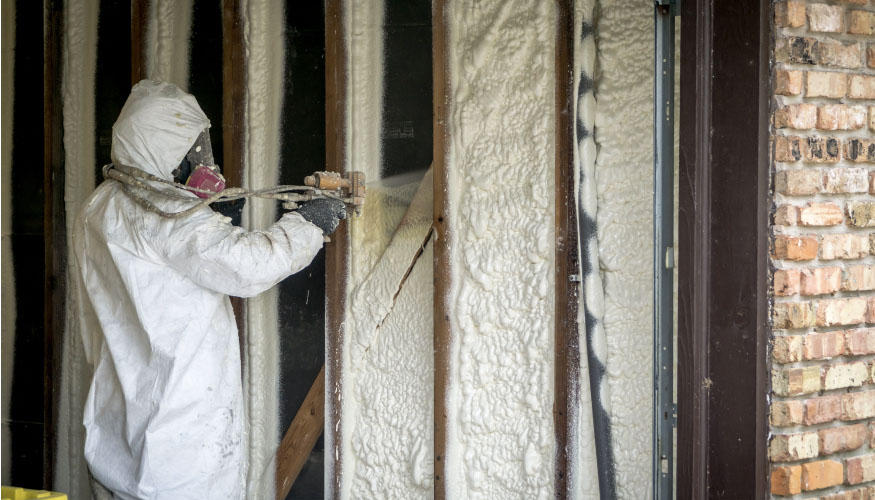
By creating an airtight and well-insulated home, spray foam allows the HVAC system to run longer, more normal cycles. Because the house holds its temperature so well, the A/C can focus on its secondary job: dehumidification. You’ll notice the air feels cooler and crisper at the same thermostat setting because the excess humidity is gone. This not only improves comfort but can also lead to energy savings, as you may be able to set your thermostat a degree or two higher.
Targeting Problem Areas: Basements and Crawl Spaces
For many homeowners, the battle with humidity starts in the lowest levels of the house. Vented crawl spaces are notorious for being damp, musty areas that introduce huge amounts of moisture and mold spores into the home. This happens because warm, humid summer air enters the vents and condenses on the cooler surfaces of the crawl space.
Using closed-cell spray foam to encapsulate a crawl space or insulate basement walls is one of the most effective ways to solve this problem. The process involves sealing off the vents, insulating the foundation walls with foam, and laying down a vapor barrier on the ground. This isolates the space from the damp earth and humid outdoor air, immediately cutting off a major source of indoor humidity.
- Bonus Tip: When encapsulating a crawl space, it’s often recommended to add a small supply of conditioned air to the space. This helps ensure the humidity level stays consistent with the rest of the house.
Things to Consider Before Making a Decision
If you’re considering spray foam to help with humidity, keep these points in mind:
- Identify the Source: Is your humidity problem caused by air leaks, ground moisture, or an internal source like poor bathroom ventilation? A professional can help diagnose the root cause.
- Choose the Right Foam: For any area where moisture is a concern (basements, crawl spaces), closed-cell foam is almost always the correct choice due to its vapor barrier properties.
- Plan for Ventilation: Making a home very airtight means you need to control how fresh air gets in. An energy recovery ventilator (ERV) or heat recovery ventilator (HRV) can provide fresh air without compromising your home’s efficiency or humidity control.
- Hire a Qualified Professional: The performance of spray foam is entirely dependent on proper installation. An experienced contractor will understand the science behind moisture management and apply the product correctly.
With these points in mind, it’s helpful to look at some of the most common questions homeowners have about spray foam and humidity.
Common Questions About Spray Foam and Humidity
Will spray foam fix a musty smell in my house?
It can, if the smell is caused by mold or mildew growing in a damp crawl space or basement. By sealing off the moisture source and stopping air from that area from entering your living space, it often eliminates the odor.
Do I still need to run a dehumidifier in my basement after using spray foam?
You may not need one at all, or you’ll find it runs far less often. After insulating with closed-cell foam, many homeowners find their basement stays naturally dry and comfortable year-round.
Can spray foam cause moisture problems?
Only if installed improperly. For example, applying a vapor barrier like closed-cell foam in the wrong location in a wall assembly can trap moisture. This is why working with a knowledgeable installer who understands your local climate is so important.
Does spray foam help with window condensation in the winter?
Yes, it can. Winter window condensation is often a sign of high indoor humidity. By helping your HVAC system manage humidity better and by stopping cold drafts that cool the window surfaces, spray foam can reduce this problem.
How quickly will I notice a difference in humidity?
The change is often noticeable within a day or two after the installation is complete. The air will feel less “heavy” or “sticky,” especially during humid weather.
Achieving a Drier, More Comfortable Home
Professional spray foam insulation is a powerful tool in the fight against high indoor humidity. By tackling the root causes of the problem—air leakage and vapor diffusion—it creates an environment where your home’s mechanical systems can perform as designed. The result is a home that isn’t just more energy-efficient, but also healthier and more comfortable to live in every day.
Understanding the specific sources of humidity in your home is the first step toward solving the problem. A professional insulation contractor can perform an assessment and explain how an integrated system of air sealing and insulation can help. For homeowners looking for an expert opinion, companies like Nevada Urethane provide specialized consultations for home performance issues. Their team can help create a plan tailored to your home’s needs. They can be reached by phone at (775) 500-0024 or by email at [email protected] for more information.
Reviewer: Maria Lopez offered detailed feedback after reviewing this post. Her 10 years of experience in spray foam work helped guide the tone and suggestions toward realistic strategies.







Post Comment