
Benefits of Open-Cell Spray Foam in Wall Cavities
Open-cell spray foam has changed how residential and commercial wall cavities are insulated. It’s not just about thermal resistance—open-cell spray foam affects soundproofing, air sealing, energy savings, and even structural performance. The specific way this material expands and adheres inside walls gives it unique advantages that suit both new construction and retrofit insulation projects.
This article explains the direct benefits of using open-cell spray foam in wall cavities. It focuses on how the insulation performs over time, where it works best, and what makes it different from other materials. You’ll also find answers to technical questions professionals often ask about its use, performance, and installation.
Thermal Performance Inside Wall Cavities
Open-cell spray foam provides continuous insulation, forming a seamless thermal barrier across wall cavities. Its performance characteristics are shaped by how it expands and fills every gap between framing materials.
How Expansion Affects Thermal Resistance
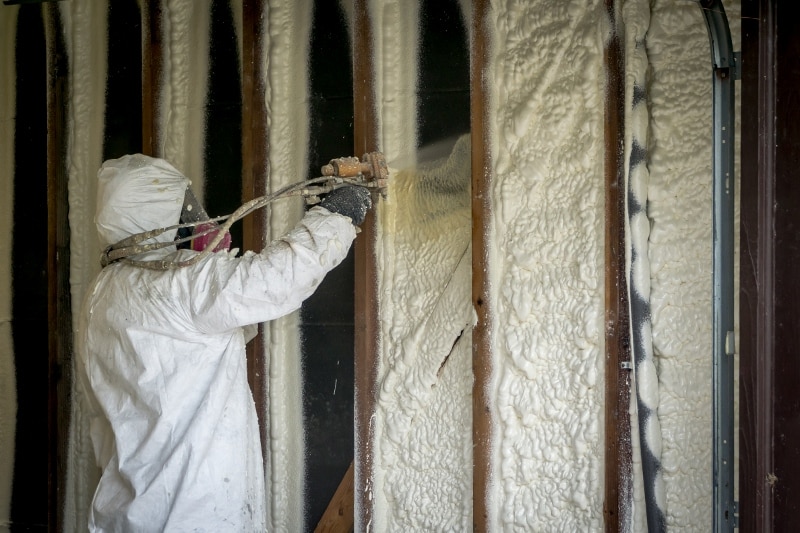
The foam expands up to 100 times its original volume, creating a uniform layer that fills voids and cracks. This eliminates thermal bridging in areas traditional batt insulation might miss.
- Open-cell spray foam has an R-value of approximately R-3.5 to R-3.8 per inch, which is lower than closed-cell foam but adequate for interior walls where moisture resistance isn’t the priority.
- It’s best used in climate zones where vapor impermeability is not required.

Preventing Heat Loss Through Convection
Air movement inside walls contributes to energy loss. Open-cell foam significantly reduces air exchange by sealing air paths.
- Helps maintain consistent indoor temperatures year-round
- Reduces HVAC workload, lowering long-term energy costs
Improved Air Sealing Properties
One of the biggest benefits of open-cell spray foam is how well it limits air infiltration. This impacts both energy efficiency and indoor comfort.
Creating an Airtight Envelope
Open-cell foam creates a continuous air barrier by expanding into cracks and seams between studs, sheathing, and other framing elements.
- Helps prevent outside air from entering conditioned spaces
- Reduces drafts and maintains temperature control
- Works especially well in irregularly framed or retrofitted walls
Air Sealing Compared to Other Materials
Traditional insulation like fiberglass or cellulose does not inherently block air movement.
|
Insulation Type |
Air Sealing Capability |
Material Cost (per sq ft) |
Typical R-Value/inch |
|---|---|---|---|
|
Open-cell spray foam |
Excellent |
$$ |
3.5–3.8 |
|
Fiberglass batts |
Poor |
$ |
3.2–3.4 |
|
Cellulose (dense-pack) |
Fair |
$ |
3.2–3.8 |
Sound Absorption and Acoustic Control
Beyond energy performance, open-cell spray foam contributes to a quieter interior environment—especially useful in homes with shared walls or close proximity to exterior noise.
Noise Reduction in Wall Cavities
The porous structure of open-cell foam makes it ideal for sound dampening. It absorbs airborne noise rather than reflecting it, helping reduce:
- Voices between rooms
- Footsteps in multi-story buildings
- Outdoor noise in urban or high-traffic areas
Where Acoustic Benefits Matter Most
While it’s not a substitute for specialized acoustic materials, it improves baseline sound insulation in:
- Bedrooms
- Home offices
- Apartments or duplexes
- Interior partition walls
Moisture and Vapor Considerations
Unlike closed-cell foam, open-cell foam is vapor-permeable, meaning it allows moisture to pass through. This is helpful or risky depending on climate, placement, and building design.
When Vapor Permeability Is a Benefit
In certain climates, moisture needs to escape wall assemblies to prevent trapped humidity and mold.
- Open-cell foam allows the wall to “breathe,” reducing condensation risk
- Works well in interior walls or above-grade exterior walls in mixed-humid climates
Moisture Management Precautions
It should not be used below-grade or in areas where water intrusion is a risk unless combined with a vapor retarder.
- Always check local codes regarding vapor barriers
- Improper use can result in moisture accumulation behind foam layers
Material Flexibility and Application Efficiency
Installation is often faster and more adaptable with open-cell foam compared to dense insulation methods. Its lightweight composition and high expansion rate offer practical jobsite advantages.
Faster Installation for Complex Framing
Irregular cavity shapes or existing wall framing pose fewer problems.
- The foam self-adjusts to uneven gaps
- Reduces the need for precision cuts or batts
- Less material waste during install
Lightweight Yet Expansive
Its lower density (typically 0.5 lb/ft³) makes it easier to apply on walls without overloading structural members.
- Ideal for interior partition walls, ceiling slopes, and between-floor separations
Environmental and Indoor Air Quality Impact
The environmental profile of insulation materials matters more than ever. Open-cell spray foam balances performance with certain sustainability factors, especially in relation to indoor comfort.
Low VOC Options Available
Many spray foams now meet low-emission standards for Volatile Organic Compounds (VOCs), reducing impact on indoor air quality.
- Safe for indoor environments after cure
- Some products are GREENGUARD Gold Certified
Lower Material Use for Same Coverage
Because of its expansion, less material by volume is needed to fill cavities, which may lower waste during application.
Common Questions
Can open-cell spray foam be used in exterior walls?
Yes, but it must be paired with an approved vapor retarder in cold or mixed climates. On its own, it allows vapor movement, which can lead to condensation if not addressed.
How does open-cell compare to closed-cell foam in wall applications?
Open-cell foam is more flexible, offers better sound absorption, and is typically more cost-effective. Closed-cell foam has higher R-value and moisture resistance, better suited for exterior sheathing or basement walls.
Does open-cell spray foam attract pests or rodents?
No, spray foam doesn’t serve as food for pests. However, like any wall cavity, if other entry points exist, pests may still enter unless proper sealing is done.
Can I install open-cell spray foam myself?
DIY kits exist, but professional installation is recommended to ensure proper expansion, coverage, and safety. Improper installation can lead to gaps or underperformance.
Conclusion
Open-cell spray foam offers multiple advantages when used in wall cavities—from thermal efficiency to sound dampening and improved air sealing. Its ability to expand and fill complex spaces makes it highly adaptable, particularly in residential buildings. While its R-value is modest compared to closed-cell options, its performance in interior walls is more than adequate for most projects. For optimal results, it’s best to rely on professional spray foam insulation services that ensure proper application and long-term performance.
The decision to use open-cell foam should consider climate, moisture exposure, and specific building needs. When properly installed, it delivers consistent energy savings, quieter rooms, and better indoor comfort—all while supporting an efficient construction process.
FAQs
How thick should open-cell spray foam be in a wall cavity? In standard 2×4 wall cavities, open-cell spray foam is typically applied at 3.5 inches to fully fill the space. This provides the expected R-value and air sealing benefits.
Is open-cell spray foam fire resistant? Open-cell foam is not fireproof but does meet building code standards when covered with a thermal barrier, such as drywall. Always verify with product-specific fire ratings.
Does open-cell foam shrink or settle over time? No, once cured, open-cell spray foam remains stable. It adheres tightly to surfaces and doesn’t compress or sag like fiberglass batts.
Can open-cell spray foam be used behind electrical boxes? Yes, but caution is needed not to overfill. Foam should be applied around—not inside—boxes to avoid damage or code violations.
Will open-cell foam help reduce humidity in walls? While open-cell foam is vapor permeable, it doesn’t manage humidity directly. However, by sealing air leaks, it helps limit moist air from entering walls where condensation could occur.
Reviewer: Maria Lopez reviewed the article and brought 12 years of insulation industry experience to improve the guidance. Practical tips were added, and the content was made clearer and more useful for contractors working in the field every day








Post Comment