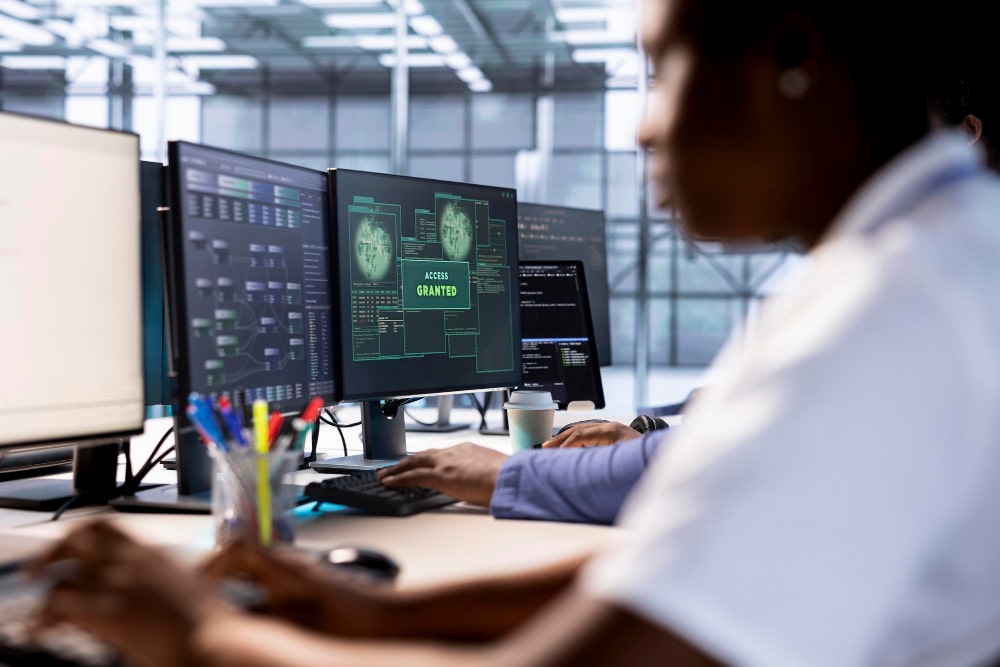
Cybersecurity Solutions for Government: A Key Component of IT Modernization
As the world becomes increasingly digitized, the government sector is embracing modern technologies to enhance public services, streamline operations, and improve the overall citizen experience. From healthcare systems to national security, government agencies worldwide are leaning on new innovations to stay relevant and efficient in an evolving landscape. However, with this increased digitization comes a crucial concern—cybersecurity.
Cyber threats have evolved significantly in recent years, and the rise of sophisticated cyber-attacks targeting governments worldwide has underscored the need for comprehensive and robust cybersecurity solutions. In tandem with this, government IT modernization efforts are making the implementation of advanced cybersecurity strategies more urgent and relevant than ever.
In this blog post, we’ll explore the intersection of cybersecurity solutions for government and government IT modernization, and why it is essential for safeguarding the integrity, availability, and confidentiality of sensitive governmental data and services.
The Need for Cybersecurity Solutions in Government
Governments store and manage vast amounts of sensitive data, from citizens’ personal information to classified intelligence. This data is a prime target for cybercriminals, hacktivists, and state-sponsored attackers. Government cybersecurity breaches can have far-reaching consequences, including the compromise of national security, the erosion of public trust, and the loss of sensitive or personal information.
To ensure that these valuable data sets remain protected, cybersecurity solutions must be integrated into government IT systems as part of ongoing IT modernization efforts. These solutions not only protect against unauthorized access and attacks but also help mitigate risks related to data integrity, availability, and confidentiality.
Government IT Modernization: Why It Matters
Government IT modernization refers to the process of upgrading outdated technologies and systems to more modern, efficient, and secure platforms. This shift typically involves migrating from legacy IT infrastructure to cloud-based solutions, adopting more agile and scalable applications, and automating processes to reduce inefficiencies.
While these upgrades offer numerous benefits, such as improved operational efficiency and enhanced public services, they also introduce new security challenges. Modernizing government IT infrastructure without adequate cybersecurity measures can create vulnerabilities, making it easier for malicious actors to infiltrate critical systems.
For instance, the transition to cloud-based solutions may expose government data to external threats if proper security measures, such as encryption, identity management, and multi-factor authentication, are not put in place. The same applies to the increasing use of the Internet of Things (IoT) and connected devices in government operations, which can be a gateway for cyber-attacks if left unsecured.
Key Cybersecurity Challenges in Government IT Modernization
-
Legacy Systems and Their Vulnerabilities
Many government agencies continue to rely on outdated legacy systems that were not designed with modern security threats in mind. These systems may not be capable of integrating with newer technologies or defending against contemporary cyber threats. Legacy systems may lack encryption protocols, access controls, and other critical security measures, creating a massive gap in the government’s cybersecurity posture. -
Increasing Attack Surface
As government IT infrastructure moves to the cloud and integrates more connected devices, the “attack surface” – the number of entry points available for attackers – grows exponentially. For example, smart city technologies, which are becoming more widespread in government IT modernization, bring with them a range of potential vulnerabilities if not adequately secured. -
Budget and Resource Constraints
With governments around the world facing budget constraints, it can be difficult to invest in cutting-edge cybersecurity technologies and expertise. However, cybersecurity is not a luxury; it is a necessity. Insufficient funding for cybersecurity solutions means governments are left exposed to cyber threats, which can have dire consequences. -
Insider Threats
In addition to external cyber-attacks, governments must also contend with insider threats—individuals within the organization who may intentionally or unintentionally compromise sensitive data. These threats are often harder to detect because insiders have legitimate access to government systems. For this reason, government agencies must prioritize solutions that monitor and audit user behavior to detect any suspicious activity.
The Role of Cybersecurity Solutions in Government IT Modernization
As governments embrace IT modernization, they must adopt cybersecurity solutions that can safeguard these digital transformations. Here are some of the most effective cybersecurity measures governments can implement during IT modernization:
1. Encryption
Encryption is one of the most effective tools for protecting data in transit and at rest. Government agencies can encrypt sensitive data, ensuring that even if unauthorized access occurs, the data remains unreadable and unusable without the decryption key. End-to-end encryption in communication systems also adds an additional layer of protection for citizens’ personal information.
2. Identity and Access Management (IAM)
As government systems become more interconnected, managing access to sensitive data becomes crucial. IAM tools allow agencies to enforce strong authentication protocols, ensuring that only authorized users can access specific resources. This includes multi-factor authentication (MFA), which requires users to provide two or more forms of verification before gaining access to a system.
3. Cloud Security
With more government operations being migrated to cloud platforms, cloud security solutions are a critical part of IT modernization. Cloud security involves implementing advanced security protocols like data encryption, firewalls, intrusion detection systems (IDS), and identity management to protect sensitive data from cyber threats. Public cloud providers often have strong security features, but governments should ensure they are configured correctly and complemented by additional security measures.
4. Endpoint Protection
As government agencies deploy more mobile devices and remote access solutions, endpoint protection becomes essential. This includes deploying antivirus software, firewalls, and endpoint detection and response (EDR) tools to ensure that devices accessing government networks are free from malware and unauthorized applications. In the context of IT modernization, securing these endpoints is particularly important as government workers access systems from various locations and devices.
5. Advanced Threat Detection and Incident Response
With increasingly sophisticated cyber-attacks, governments must invest in advanced threat detection technologies like AI-powered security information and event management (SIEM) systems. These tools can identify unusual patterns and potential threats, enabling a faster and more efficient response. Additionally, governments should have comprehensive incident response plans in place to mitigate damage if a cyber-attack does occur.
6. Zero Trust Architecture (ZTA)
Zero Trust Architecture (ZTA) is a cybersecurity model based on the principle of “never trust, always verify.” Under a Zero Trust framework, all users—both internal and external—are continuously authenticated and validated before accessing any resources. This approach helps limit the risk of a data breach, even if attackers manage to infiltrate one part of the system.
7. Regular Security Audits and Compliance
Governments must conduct regular security audits and ensure compliance with relevant regulations and standards, such as the Federal Information Security Management Act (FISMA) in the United States or the General Data Protection Regulation (GDPR) in Europe. These audits help identify potential vulnerabilities and gaps in the existing cybersecurity framework, allowing for timely corrective actions.
Conclusion: A Collaborative Approach to Cybersecurity and IT Modernization
The digital transformation of government agencies through IT modernization presents enormous opportunities to improve public services, efficiency, and transparency. However, this transformation must be accompanied by strong cybersecurity solutions to protect sensitive data and ensure the continuity of government operations.
A multi-layered approach to cybersecurity, one that integrates advanced technologies and processes such as encryption, identity management, cloud security, and threat detection, is crucial. By embracing these cybersecurity solutions alongside IT modernization efforts, governments can mitigate risks and create a secure environment for citizens and public servants alike.
Ultimately, the future of government services depends on the ability to adapt to changing technology while also safeguarding against the ever-growing threat of cyber-attacks. It is clear that cybersecurity solutions for government are not just a luxury—they are an essential component of government IT modernization, and must be prioritized for success in the digital age.






Post Comment