Web3 Meets AI: How Tokenized Intelligence Is Disrupting Traditional Models
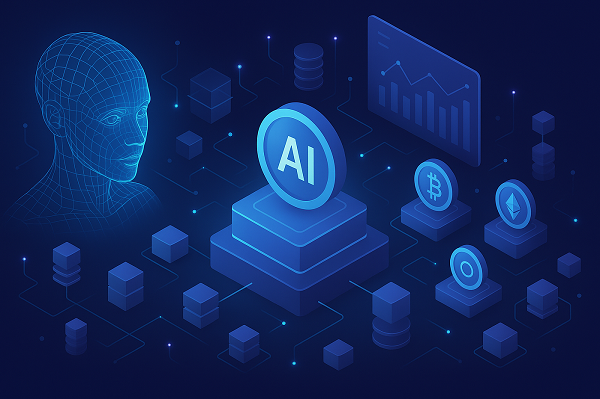
The rapid evolution of digital technology has brought two powerful forces to the forefront — Web3 and artificial intelligence (AI). Web3, with its decentralized infrastructure, shifts control from centralized entities to a distributed community. AI, on the other hand, automates learning, decision-making, and pattern recognition across massive data sets. When these two intersect, the result is tokenized intelligence — an ecosystem where AI operations are owned, governed, and incentivized through blockchain-based tokens.
Unlike traditional AI systems, which are typically controlled by a few organizations with centralized data and compute resources, tokenized intelligence introduces a decentralized model. It creates an open and transparent framework where anyone can contribute computing power, data, or algorithms and be rewarded using tokens. This combination is not just theoretical; it is gradually restructuring how value and decision-making are distributed in digital economies.
Understanding Tokenized Intelligence
Tokenized intelligence refers to the process of embedding AI functionality within blockchain networks through crypto tokens. These tokens act as the medium of exchange for computational power, data access, or AI services within decentralized ecosystems. It transforms intelligence into an asset that can be traded, earned, or staked — something that traditional systems rarely allowed.
In traditional AI ecosystems, large corporations control data pipelines, model training, and deployment infrastructure. Smaller developers and businesses often have limited access due to cost and resource barriers. In a tokenized intelligence network, these functions are broken into components that can be distributed and monetized. Contributors can share data, offer computing resources, or fine-tune models — each rewarded through a token system designed by a crypto token development company.
For example, a blockchain-based AI platform might issue tokens to data providers who contribute clean, labeled datasets for model training. Developers who improve algorithmic performance receive similar rewards. The result is a dynamic network economy that promotes fairness, transparency, and collaboration across participants.
Why Web3 Is a Natural Fit for AI
Web3 technology provides exactly what AI has been missing — verifiable ownership, data integrity, and transparent incentive mechanisms. AI systems depend on data quality, model trustworthiness, and accountability. Web3 offers the foundational tools to meet those needs.
1. Ownership of Data
AI models thrive on data, but ownership and control have always been concentrated among major tech players. Web3 allows users to retain ownership of their data while granting selective access through smart contracts. This model empowers individuals and smaller organizations to participate in AI development without losing control of their information.
2. Transparent Incentives
Traditional AI companies often hide how data is monetized. Through crypto token development, incentives become visible and programmable. Tokenomics ensures that contributors — whether they provide data, models, or compute — are compensated proportionally to their input.
3. Decentralized Infrastructure
AI computation requires massive processing power. Web3 networks allow distributed compute nodes to participate in model training and inference. Instead of relying on a single company’s data center, computation is shared across a network where each participant earns tokens for their contribution.
These aspects make Web3 a reliable infrastructure layer for the next generation of AI systems — ones that are not only intelligent but also collectively owned and governed.
Breaking Traditional AI Models
Traditional AI ecosystems operate under a centralized model. A company gathers user data, processes it in private servers, trains proprietary models, and offers the outcome as a paid service. This model restricts access, limits innovation, and keeps profits within a closed circle.
Tokenized intelligence disrupts that model by redistributing value creation. Instead of a few firms owning the data and algorithms, the ecosystem thrives through community participation. Smart contracts define how tokens are earned, distributed, and utilized, ensuring that rewards are fair and transparent.
Through crypto token development, businesses can design tokens that perform specific functions — from rewarding data contributions to facilitating governance decisions. This programmable structure eliminates the need for intermediaries and creates self-sustaining ecosystems where AI services can grow organically.
Real-World Implementation Scenarios
The merging of AI and Web3 is not limited to theory. It is already being implemented in several use cases that demonstrate how tokenized intelligence can transform industries.
1. Decentralized Data Marketplaces
AI models depend on diverse and accurate datasets. In decentralized marketplaces, individuals and organizations can upload and monetize their data. Smart contracts handle permissions and payments automatically through tokens. This ensures that data ownership remains intact while providing high-quality inputs for AI systems.
2. Compute Resource Sharing
AI requires significant computing resources. Tokenized systems enable users to share idle computational power and earn tokens. This approach creates a scalable network where AI workloads are distributed efficiently without relying on centralized cloud providers.
3. Autonomous Agent Networks
AI agents can operate independently using token-based incentives. For instance, an AI system that performs trading or optimization tasks can use tokens to access data feeds, pay for compute cycles, and distribute profits. This model reduces operational costs and introduces autonomy into AI decision-making.
4. AI Governance Through DAOs
Decentralized autonomous organizations (DAOs) provide a governance model where token holders vote on updates, funding, or ethical boundaries of AI development. Instead of centralized boards, decisions are made collectively through on-chain proposals, ensuring accountability and alignment with community interests.
How Crypto Token Development Enables Tokenized AI
The backbone of tokenized intelligence lies in the design and implementation of tokens. A crypto token development company plays a crucial role in building these frameworks. Token creation is not just about launching a digital asset; it involves defining economic parameters, governance models, and interoperability mechanisms.
Here’s how professional token development enables AI integration:
-
Smart Contract Design: Tokens are programmed with specific functions that define how they are earned, transferred, and burned. In AI ecosystems, smart contracts automate payments for model training, data validation, and service usage.
-
Tokenomics: Effective tokenomics determine the health of the network. Developers design mechanisms that encourage contribution while preventing speculation or misuse.
-
Governance Features: Tokens can represent voting rights or stake in AI platforms. This ensures that stakeholders influence development decisions collectively.
-
Security Protocols: A secure token framework prevents exploitation, ensuring that AI systems cannot be manipulated through malicious transactions.
By aligning technical and economic structures, crypto token development transforms AI systems from centralized projects into decentralized economies driven by transparent incentives.
The Economic Shift: From Platforms to Protocols
One of the biggest disruptions caused by tokenized intelligence is the shift from platform-based business models to protocol-based economies. Traditional AI companies operate as platforms that capture value at the top of the chain. Tokenized AI systems, however, distribute that value across the participants who build, maintain, and use the network.
Instead of paying subscription fees to a centralized provider, users stake or earn tokens through participation. This creates a more inclusive economic structure where growth benefits the entire ecosystem rather than a single entity.
This transformation also opens new opportunities for crypto token development companies. As more industries seek decentralized solutions for AI deployment, these companies are building customized tokens that integrate AI functionality into logistics, finance, healthcare, and education. They are designing systems where token flows directly represent value creation, not just speculation.
The Role of Decentralized Data in AI Training
Data is the foundation of any AI system. However, access to high-quality, diverse data has long been a challenge. Centralized organizations often hoard information, limiting the range of models that can be built. In contrast, decentralized AI platforms supported by tokens encourage data sharing by rewarding contributors.
Each dataset added to the network increases its value. Through blockchain, data provenance is recorded immutably, ensuring traceability and authenticity. Contributors retain control over how their data is used, and smart contracts enforce usage rights automatically.
This decentralized data economy not only improves the quantity and quality of information available to AI but also lowers entry barriers for new developers. Smaller teams and startups can participate in AI innovation without depending on major corporations or expensive cloud infrastructure.
Challenges in Tokenized Intelligence
While the convergence of AI and Web3 is promising, it comes with several challenges that must be addressed for long-term sustainability.
-
Scalability: Running AI workloads on decentralized networks requires efficient scaling solutions. Blockchain networks must process transactions and model updates at high speeds without compromising security.
-
Data Privacy: Although decentralized data sharing promotes openness, ensuring that sensitive information remains private is critical. Encryption and zero-knowledge proofs can help balance transparency with confidentiality.
-
Model Verification: AI models trained in decentralized environments need mechanisms for performance validation. Blockchain oracles and audit protocols are being developed to verify results without exposing proprietary code.
-
Economic Stability: Poorly designed tokenomics can lead to volatility or misuse. This is where expertise from an experienced crypto token development company becomes essential — ensuring that tokens maintain functional and economic balance.
These challenges do not diminish the potential of tokenized intelligence but highlight the importance of deliberate planning, robust infrastructure, and sound token design.
The Future of AI in the Web3 Landscape
The relationship between AI and Web3 is still unfolding, but the direction is clear. As tokenized intelligence matures, it will define how future systems are built and monetized. Instead of relying on centralized firms for AI capabilities, individuals and organizations will access decentralized intelligence through tokenized marketplaces.
We can expect to see AI models that pay for their own resources, networks where communities control AI ethics, and ecosystems where innovation grows without central oversight. This future depends heavily on the progress of crypto token development — building tokens that can handle complex interactions, secure payments, and fair governance.
Businesses exploring AI integration are now partnering with crypto token development companies to create utility-driven tokens. These tokens not only fund AI research but also provide governance tools, ensuring that technological growth remains accountable and inclusive.
Conclusion
The merging of Web3 and AI marks a pivotal shift in digital innovation. Tokenized intelligence is dismantling traditional models that relied on centralized control of data, infrastructure, and profits. By leveraging crypto token development, the world is moving toward systems where intelligence, value, and ownership are shared transparently across global networks.
This transformation is not just about technology; it’s about restructuring digital economies to reward contribution and collaboration. As decentralized AI platforms evolve, they will redefine industries — from data management and finance to logistics and creative production.
In this new era, those who understand and build with tokenized intelligence will shape how AI interacts with society. And behind every successful implementation will be the foundation of strong, secure, and well-designed crypto token development, ensuring that the decentralized future of intelligence is fair, efficient, and open to all.







Post Comment