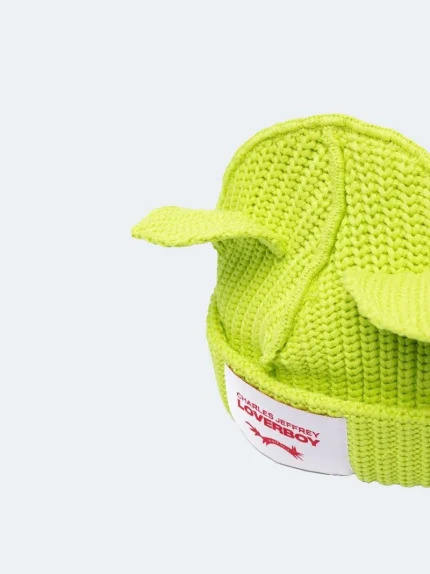
The Loverboy Hat: A Symbol of Rebellion, Identity, and Avant-Garde Fashion
Introduction: Beyond the Brim — The Loverboy Hat Phenomenon
In the ever-evolving world of fashion, certain pieces transcend mere trends and become powerful cultural symbols. The Loverboy hat, originally conceived by designer Charles Jeffrey, is one such icon. It’s not just an accessory—it’s a visual manifesto. A rebellious emblem of queer identity, self-expression, and artistic provocation, the Loverboy hat has stormed runways, ignited subcultures, and captured the imagination of style connoisseurs worldwide. With its distinctive horned silhouette and punk-art flair, this headpiece defies convention and demands attention. But to understand the real gravity of the Loverboy hat, one must dive deeper into its origins, its message, and why it has captivated a generation seeking authenticity and defiance in fashion.
The Origins: Charles Jeffrey and the Birth of a Cultural Icon
Charles Jeffrey, a Scottish-born designer and creative visionary, first introduced the Loverboy hat as part of his broader fashion label, Charles Jeffrey LOVERBOY. With a background in club culture and performance art, Jeffrey blurred the lines between fashion and theater. His aesthetic—bold, chaotic, unapologetically queer—was a reaction to both the oppressive norms of high fashion and the lack of queer representation within its elite circles.
The horned Loverboy hat debuted in collections that were part rave, part protest, and entirely revolutionary. Inspired by cartoonish fantasy, pagan rituals, and punk sensibilities, the hat quickly became a standout accessory. It was unmistakably loud and deliberately confrontational. More than that, it symbolized a kind of armor—an external declaration of inner truth for anyone daring enough to wear it.
Symbolism of the Horns: Power, Queerness, and Subversion
The most defining feature of the Loverboy hat is its sculpted, upward-pointing horns. These are not merely for shock value; they carry deep symbolic resonance. Horns have long been associated with mythology, power, rebellion, and otherworldliness. In the context of the Loverboy hat, they become a statement of queerness and defiance.
Wearing horns, in many traditional cultures, was linked to virility, magic, and resistance. In Jeffrey’s interpretation, the horns aren’t about masculinity but about transcending gender norms altogether. They channel a raw, non-binary energy that challenges the sanitized aesthetic of mainstream fashion. The horns empower the wearer—they transform them into a walking artwork, a creature of fantasy who refuses to conform.
This is why the hat has found a following not only among avant-garde fashionistas but within queer communities, where it is worn proudly at parades, clubs, and fashion weeks. It’s not just a headpiece; it’s a provocation.
Club Kid Aesthetic Meets Couture
Part of the magic behind the Loverboy hat is its synthesis of high fashion with DIY, underground vibes. Charles Jeffrey, influenced by the Club Kids of New York and the underground queer scene of London, brings an aesthetic that feels hand-painted, handmade, and deeply personal. Every Loverboy hat seems to scream, “This was made in the chaos of a rave at 4 a.m.”
But don’t be fooled—despite its chaotic appearance, the hat is meticulously crafted. Materials range from luxurious felt to upcycled fabrics, and the construction ensures the hat keeps its signature shape even after hours of wear. It represents the best of both worlds: the soul of rebellion with the craftsmanship of couture. This duality makes it a favorite on fashion runways while still resonating deeply with subcultures.
The Role of Performance and Identity
Fashion has always been a tool of performance. The Loverboy hat takes this to an entirely new level. It invites the wearer to step into a persona, to embrace their inner creature or hero or misfit. For many, wearing the Loverboy hat is like putting on a costume—not to hide, but to reveal.
Performance artist and drag scenes have embraced the hat for its theatricality. It complements makeup looks that are exaggerated and transformative. It becomes part of a larger narrative, allowing wearers to use fashion not just to adorn themselves but to tell a story. This makes it especially powerful for LGBTQ+ individuals, whose very existence can sometimes be a performance of defiance in a society that still polices difference.
By putting on a Loverboy hat, wearers are not simply making a fashion statement—they’re staking a claim to space, visibility, and identity.
Runway to Streetwear: Bridging the Gap
One of the most fascinating developments in the Loverboy hat’s journey is its migration from exclusive fashion week runways to the city streets. Initially, its dramatic appearance made it feel reserved for the artistic elite. But thanks to a growing appetite for experimental fashion in the mainstream, the hat has become a staple among Gen Z creatives, TikTok fashion influencers, and style renegades.
Its boldness fits right into a generation that prizes authenticity over assimilation. Streetwear, long the playground for self-stylists and rule-breakers, has welcomed the Loverboy hat into its fold. It’s now styled with oversized puffers, deconstructed denim, combat boots, and layered jewelry. Its presence in everyday settings only reinforces its status as a cultural equalizer—luxury without pretension.
The Hat as Protest Wear
The Loverboy hat, in many contexts, functions as protest wear. When worn in spaces where queerness is policed or marginalized, it becomes a subtle act of revolution. Its whimsical, exaggerated form says: I’m not shrinking to fit into your expectations. In pride marches and political rallies, the Loverboy hat often surfaces as a silent scream—an assertion of joy in the face of hostility.
This is a hallmark of Charles Jeffrey’s brand ethos: fashion as resistance. The hat’s defiant design disrupts the quiet palette of normcore or corporate monotony. It’s a refusal to be invisible.
Sustainability and Conscious Craft
In an era where conscious consumerism is no longer optional, the Loverboy hat also speaks to sustainability—not only in how it’s often made, but in what it represents. Charles Jeffrey has consistently advocated for more ethical fashion practices, emphasizing upcycling, handcrafting, and limited production runs.
The result is that each Loverboy hat feels like a collector’s piece rather than a mass-produced accessory. Its uniqueness and small-batch nature foster a deeper connection between wearer and item. This mindful approach counters the throwaway culture of fast fashion and encourages slower, more intentional styling.
The Cultural Legacy in the Making
The Loverboy hat is still a relatively new phenomenon, but its cultural footprint is undeniable. It is featured in major fashion editorials, exhibited in fashion museums, and discussed in academic spaces analyzing gender and fashion theory. In this sense, the hat is becoming more than a trend—it’s a timestamp of a broader shift in how we express identity and emotion through clothing.
Years from now, fashion historians may look at the Loverboy hat as a defining artifact of our time: an era of disruption, authenticity, and fearless self-expression. Its visual language is rich with semiotics—queer pride, artistic defiance, mythological fantasy—and it is these layers that will ensure its relevance well beyond fleeting seasons.
Conclusion: More Than Just a Hat
To call the Loverboy hat “just a hat” is to miss the point entirely. It is a cultural object, a wearable philosophy, and a manifesto stitched into fabric. It challenges us to view fashion not as decoration but as declaration. Whether worn in a nightclub, on a runway, or simply as part of someone’s daily uniform of self-expression, the Loverboy hat does what few accessories can: it transforms, empowers, and speaks without words.
In a world that often demands silence, the Loverboy hat shouts—joyfully, defiantly, beautifully. And that makes it not just a piece of fashion, but a piece of history in the making.








Post Comment