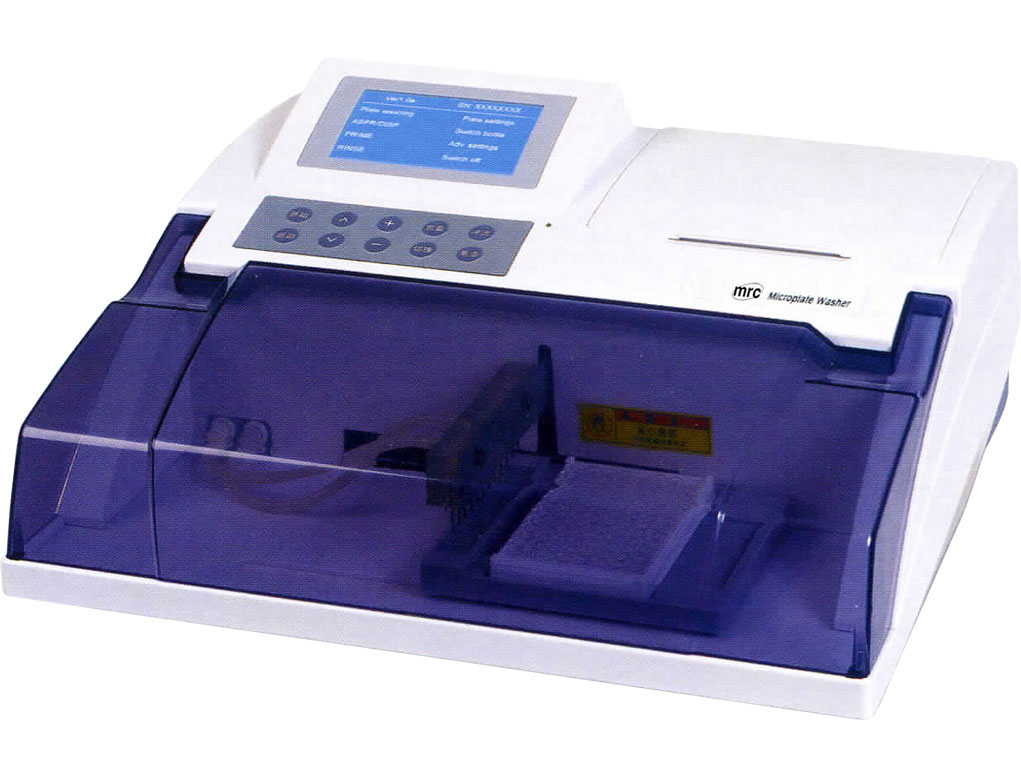
Why Every Modern Lab Needs a Microplate Washer
Labs handling immunoassays, ELISA protocols, or cell-based studies rely on accuracy, consistency, and speed. Manual plate washing introduces error and takes time. A microplate washer removes this variability, allowing technicians to handle complex protocols with fewer interruptions.
As labs expand throughput and reduce manual steps, these washers become essential equipment. They improve wash uniformity, limit cross-contamination, and reduce waste. For clinical and research labs running repeated assays across dozens or hundreds of plates per week, the return on investment is measurable.
Understanding how a washer fits into existing workflows can help managers improve reproducibility and free up staff time for other high-skill tasks.
Core Function and Benefit
A microplate washer automates the rinsing of microplate wells. These plates are used in ELISA, cell culture, and other binding-based assays. After each incubation step, excess reagent or unbound material must be removed carefully, without disrupting the assay’s integrity.
Washers handle this with precision. They use programmed cycles to aspirate and dispense fluids uniformly across all wells. Timing, volume, and pressure can be controlled digitally. This eliminates edge effects, under-washing, or sample carryover that often occurs with manual pipetting.
Labs using semi- or fully automated readers often pair them with washers. The addition creates a streamlined immunoassay workflow from sample load to signal detection.
Key Considerations for Purchase
The type of plate used is important. Some washers are optimized for 96-well plates, while others support 384 or more. Look for compatibility with U- and V-bottom wells if your lab uses varied formats.
Digital control features matter too. Wash cycles should be customizable, and the interface should allow technicians to store different wash protocols. This is useful in labs where multiple assays are run concurrently or under different validation requirements.
Waste management and reagent reservoirs also factor into lab setup. Compact washers with built-in bottles simplify bench layout and allow for quick daily prep.
Providers such as NE LabSystems offer washers designed for routine use in clinical labs. Their models are suitable for labs with low to medium throughput that still require consistent wash quality across plates.
Integration into Daily Workflow
Introducing a microplate washer reduces hands-on time and limits repetitive motion risks. Labs that previously assigned full-time technicians to washing can reallocate that labor to result interpretation or sample prep.
Data integrity improves as well. Manual wash steps are prone to human inconsistency. Automated washers perform the same pattern every time, supporting better reproducibility in diagnostic and research outputs.
Over time, this consistency reduces repeat testing, reagent loss, and plate waste, key factors in lab efficiency and cost control.
Final Note
A microplate washer supports the precision and pace modern labs require. It automates a repetitive but critical part of the assay process, protecting both data quality and technician time.
Lab managers planning for growth, quality improvement, or staffing changes should consider washers a core part of their workflow strategy. Equipment providers like NE LabSystems carry compact, easy-to-program models designed for clinical and academic labs alike.







Post Comment