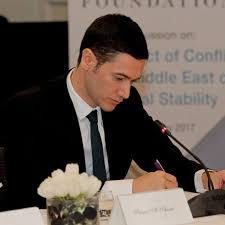
The Literary Contributions of Author Siwar Al Assad to Middle Eastern Fiction
The Middle East has always been the land of mysteries, historical epics, and war chronicles that have all been steeped in tradition and politics. But author Siwar Al Assad brings something different to the table, something both deeply personal and universally resonant. His novels explore the human heart as much as they explore the consequences of exile, memory, and identity. In doing so, he has carved out a distinct space for himself within the contemporary literary landscape.
Writing in both French and English, Al Assad bridges cultures with ease. But it’s not just language that sets his work apart; it’s the emotional clarity. His stories are about asking the right questions and allowing the reader to sit with the discomfort, longing, and quiet resilience that defines much of life in and beyond the Middle East. Let’s walk you through what Al Assad has contributed to Middle Eastern Fiction.
A Multilingual Voice Rooted in Syrian Heritage
Born in Syria in 1975, author Siwar Al Assad left his homeland at the age of nine. Educated in Switzerland, the UK, and at Panthéon-Sorbonne University in Paris, his global upbringing gave him the tools to speak to a wide audience. But he never turned away from his roots. Instead, he used his education and experiences to craft narratives that reflect the complexity of Syrian identity, especially when lived from afar.
Unlike many writers whose work is shaped entirely by either the East or West, Al Assad exists between both. His characters often navigate that same tension. In Guard Thy Heart, for example, Paul Ollenson, a UN lawyer, is both a man of the world and a man haunted by what he has left behind emotionally. These subtleties resonate with readers who understand that displacement isn’t always physical. Sometimes it’s emotional. Sometimes, it’s spiritual.
A Coeur Perdu: Where Romantic Thriller Meets Existential Quest
One of Al Assad’s most acclaimed novels, A Coeur Perdu, captures the story of a man who receives a heart transplant and emerges with a fierce longing to uncover a hidden past. It’s a romantic thriller, yes, but it’s also an existential meditation. Author Siwar Al Assad uses suspense to explore deeper questions about identity, mortality, and the invisible threads that connect people across time and space.
This ability to blend genre with depth is one of Al Assad’s signature strengths. He doesn’t shy away from plot-driven tension, but the emotional stakes always carry the real weight. That’s what gives his fiction its lasting power. It speaks to the heart, even as it engages the mind.
Palmyra as a Symbol of Memory and Loss
In Palmyre pour toujours, Al Assad turns his attention to cultural heritage. The book is a literary tribute to the ancient Syrian city of Palmyra, a UNESCO World Heritage Site that suffered immense damage during Syria’s civil war. But rather than simply documenting its historical importance, Al Assad infuses the text with personal memory and poetic reflection.
Here, author Siwar Al Assad isn’t just telling a story; he’s preserving one. His words serve as a call to remember what war tries to erase: culture, beauty, and shared history. Through this work, he positions literature as both a witness and participant in cultural survival.
Romantic Fiction as a Mirror for Global Readers
Siwar Al Assad’s romantic fiction is not your typical escapism. His novels often depict love as something interwoven with grief, misunderstanding, and self-discovery. They appeal to readers worldwide because they deal with universal themes, falling in love, losing it, and finding it again, but within frameworks shaped by political complexity, emotional exile, and moral ambiguity.
That’s what makes Siwar Al Assad such a valuable contributor to Middle Eastern fiction. His work resonates far beyond regional identity. It speaks to anyone who has wrestled with the conflict between duty and desire, homeland and distance, silence and expression.
Final Note
Beyond the page, Al Assad leads the Arab News Network and directs the Aramea Foundation, where he advocates for Syrian refugees and the preservation of Levantine heritage. These roles give his fiction additional weight; he’s not just writing about displacement or cultural loss from a distance. He’s working, day by day, to address those very issues in real life.
And that’s the essence of his literary contribution. Author Siwar Al Assad writes not just to entertain but to illuminate. To preserve. To provoke thought and emotion in equal measure. His books remind us that fiction can do more than tell stories; it can build bridges, offer shelter, and plant the seeds of change.






Post Comment