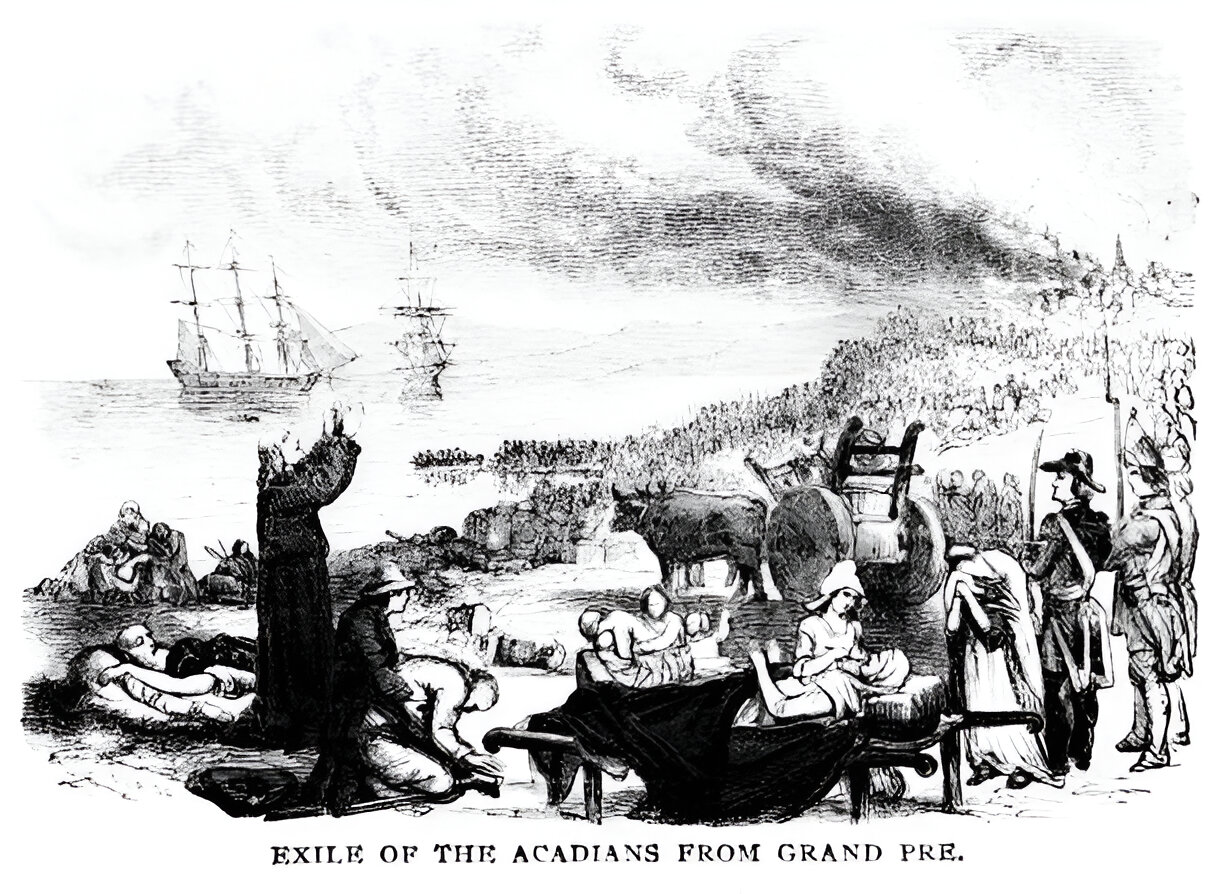
The Great Derangement of 1755 and its impact on Acadian settlers
The Great Derangement of 1755, also known as Le Grand Dérangement, stands as a pivotal and tragic chapter in North American history. This event led to the forced expulsion of thousands of Acadian settlers from their ancestral lands in Nova Scotia, profoundly altering their lives and reshaping the cultural landscape of the region. The repercussions of this upheaval have echoed through generations, inspiring numerous literary works, including author Douglas A. Gosselin’s inspiration for Pawn to King’s End.
The Acadians were descendants of French colonists who settled in the Maritime provinces of Canada—primarily Nova Scotia, New Brunswick, and Prince Edward Island—beginning in the early 17th century. They developed a distinct culture, characterized by a strong sense of community and a harmonious relationship with the land. Despite living under British rule after the Treaty of Utrecht in 1713, the Acadians maintained a policy of neutrality during conflicts between Britain and France. However, their refusal to swear an unconditional oath of allegiance to the British Crown sowed seeds of suspicion and mistrust.
The Onset of Deportation
In 1755, amidst escalating tensions and the looming threat of war, British authorities in Nova Scotia, led by Governor Charles Lawrence, decided to expel the Acadian population. This decision was influenced by fears of Acadian loyalty to France and the strategic importance of their lands. The deportation began in earnest in September 1755, with British troops rounding up Acadian families, often under false pretenses, and forcing them onto ships bound for various destinations. Homes, farms, and churches were burned to prevent their return, leading to widespread suffering and loss.
Impact on Acadian Settlers
The expulsion had devastating effects on the Acadian people. Families were separated, communities dismantled, and thousands perished due to disease, starvation, and shipwrecks during the voyages. Those who survived found themselves in unfamiliar territories, from the American colonies to Europe, struggling to rebuild their lives. In Massachusetts, for instance, nearly 2,000 Acadians arrived in 1755, facing harsh conditions and, in many cases, indentured servitude. Their Catholic faith and French language further isolated them in predominantly Protestant and English-speaking communities.
Cultural Resilience and Legacy
Despite the immense hardships, the Acadian spirit endured. Many eventually resettled in Louisiana, where they became known as Cajuns, contributing richly to the region’s cultural tapestry. Others returned to the Maritime provinces years later, establishing new communities that preserved their unique heritage. The story of the Acadians’ perseverance has been immortalized in literature and art, symbolizing the universal themes of displacement and resilience.
Literary Inspirations
The narrative of the Great Derangement has inspired numerous authors to explore themes of exile, identity, and survival. One such work is Pawn to King’s End by Douglas A. Gosselin. In this novel, Gosselin delves into the psychological and emotional turmoil experienced by those uprooted from their homeland, drawing parallels between the strategic moves in chess and the calculated decisions that led to the Acadians’ displacement. The novel serves as a poignant reminder of the human cost of political and military strategies, echoing the sentiments of loss and hope that define the Acadian experience.
Conclusion
The Great Derangement of 1755 remains a somber reminder of the consequences of intolerance and the resilience of the human spirit. The forced expulsion of the Acadians not only reshaped their own destinies but also left an indelible mark on the cultural landscapes of North America. Through the preservation of their traditions and the stories inspired by their journey, the legacy of the Acadians continues to resonate, offering lessons on the enduring strength of community and identity in the face of adversity.








Post Comment